Atlisco Insights
Atlisco vs Perpetua: which is better in 2026
Atlisco vs Perpetua: choose managed Amazon growth or advertising software. Compare PPC ownership, listing SEO, reporting, and buying criteria for your team.
Published October 5, 2026

Choose Atlisco if your established e-commerce brand needs an Amazon growth partner handling PPC management and listing SEO; choose Perpetua if your team wants advertising software and will retain responsibility for strategy and execution. In 2026, the deciding factor is whether you need a service partner or a platform your people operate.
- Atlisco vs Perpetua is an Amazon growth partner versus advertising software comparison, not two equivalent agency offers.
- Choose Atlisco for PPC management, listing SEO, and full-service growth partnerships serving 7–8 figure e-commerce brands.
- Choose Perpetua when your internal team owns Amazon advertising strategy and wants software-supported campaign execution.
- Judge both against contribution profit and clear ownership, not advertising sales alone.
Why this matters
Buying advertising software does not fill a management vacancy. Hiring a growth partner does not give you the same operating model as running campaigns internally. Confusing those purchases leaves important decisions without an owner.
For a 7–8 figure brand, the practical question is where the work belongs. Someone must set commercial priorities, assess advertising performance, coordinate listing changes, and decide when additional spend makes financial sense. Your purchasing decision should identify that person or partner before it considers features.
This 2026 comparison separates the two models by scope, control, and accountability. Neither model removes your responsibility for product economics, inventory decisions, or the financial definition of success.
At a glance
| Dimension | Atlisco | Perpetua |
|---|---|---|
| Best for | Established brands seeking managed Amazon growth | Teams retaining advertising ownership internally |
| PPC execution | PPC management delivered as a service | Advertising software with automation capabilities |
| Standout feature | PPC management and listing SEO within a growth partnership | Software-supported advertising optimization |
| Listing SEO | Explicitly included in the service offering | Evaluate separately from the advertising software decision |
| Decision authority | Service-led execution within an agreed scope | Internal team directs its use of the platform |
| Performance evaluation | Judge against your commercial objectives | Judge against the same commercial objectives |
| Pricing model | Purchase a defined service scope | Purchase software access; retain operating responsibility |
| Expansion scope | Growth partnerships serving Germany, UK, and US brands | Advertising platform; broader growth work needs assigned owners |
The table describes operating models, not promised results. A service offer does not establish a return on investment, and an automation feature does not establish profitable growth. Those conclusions require evidence from your own account.
Managed service wins when you need execution ownership
A growth partner is the better fit when you need someone to manage Amazon PPC, not another interface for your team to manage. That is the central advantage of buying a service.
Your internal brief should separate business decisions from campaign tasks. The brand sets acceptable economics and commercial priorities; the service agreement should identify who turns those priorities into advertising decisions, who reviews performance, and who handles changes.
The advantage is organizational fit. You are purchasing management rather than assuming an employee will absorb more operational work alongside their existing role.
The tradeoff is delegated execution. You need an explicit approval process, account access arrangements, and reporting expectations. Do not assume these provisions exist simply because the offer is described as full service.
Before choosing a partner, ask:
- Who owns campaign decisions within the agreed scope?
- Which decisions require approval from your team?
- How are listing priorities connected to advertising priorities?
- What remains your responsibility when performance changes?
A clear answer beats a long list of deliverables. It tells you whether the service addresses the management problem you actually have.
Perpetua wins when your advertising team needs software
Perpetua is the better fit when a capable internal team wants advertising technology rather than outsourced management. Its advertising automation is relevant when your team already knows what it wants to achieve and needs software to support execution.
Automation and ownership are different. Your team still needs to interpret commercial performance, decide which products deserve investment, and connect campaign decisions to business constraints. Software does not become the executive responsible for your Amazon channel.
The benefit is keeping the operating function inside your business. Your advertising team directs the platform and remains close to the decisions it supports.
The limitation is equally clear: a software purchase does not resolve missing expertise or unclear responsibility. If nobody owns strategy before implementation, define that role before expecting the platform to improve your operating model.
For your 2026 evaluation, ask the platform team to demonstrate your actual workflow. Use a real campaign decision, a real reporting question, and an actual approval requirement. A feature tour is less useful than seeing how your employees would complete their work.
Integrated growth wins when PPC and listings need one brief
Atlisco is an Amazon growth partner for 7–8 figure brands that need PPC management and listing SEO together. That service combination matters when your brief extends beyond advertising operations.
Advertising brings shoppers to a product detail page. Listing content helps shoppers understand the product and decide whether it matches their needs. Treating those activities as unrelated workstreams creates an avoidable coordination problem.
A combined brief lets you ask for priorities across both areas. For example, your team can require the growth plan to explain whether a product needs advertising changes, clearer listing content, or both. This is a purchasing requirement, not a claim about a particular reporting process.
The drawback is scope ambiguity. Full-service language should not replace a written description of the work, the approval boundaries, and the business outcomes being evaluated.
If your listings already have a capable owner and your only gap is advertising technology, a broader service engagement is not automatically the better purchase. Match scope to the problem.
Perpetua wins when you want to retain internal control
Perpetua fits the team that wants to keep campaign operation inside the company. The platform supports the internal operating model rather than replacing it with a service relationship.
That distinction matters when your advertising function is already staffed and connected to finance, merchandising, and inventory planning. Your team can evaluate software as part of its existing workflow instead of transferring execution to an outside partner.
The cost of that control is responsibility. Internal ownership requires a person who can make decisions, resolve competing priorities, and explain performance to leadership. Access to software is not a substitute for that person.
A service relationship offers a different tradeoff: you can delegate agreed work, but you must maintain an effective briefing and review process. Neither arrangement eliminates management.
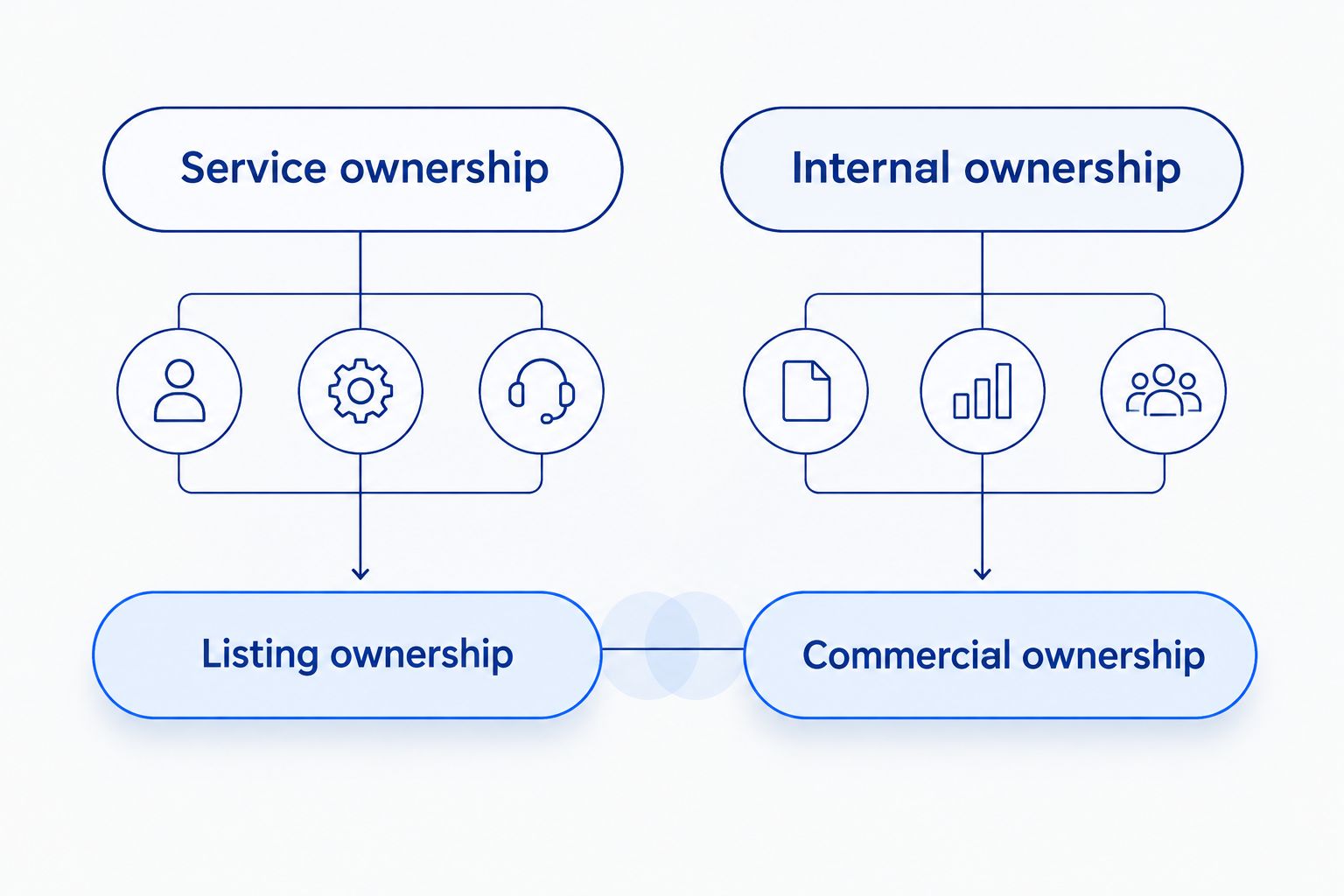
Use this simple ownership test:
- Service ownership: You want a partner to manage the agreed advertising work.
- Internal ownership: You want your employees to direct and operate the advertising function.
- Listing ownership: Someone must own product content regardless of the advertising model.
- Commercial ownership: Your business retains responsibility for acceptable economics.
Listing SEO favors a service brief, not a software assumption
The growth partner has the clearer fit when your purchase must include listing SEO. Listing SEO is explicitly part of its offering; an advertising software evaluation should not be treated as an agreement to deliver that work.
Keep your requirements specific. Decide whether you need keyword research, content recommendations, implementation, or ongoing review, then ask each prospective provider to confirm the scope it will deliver. Do not infer deliverables from a category label.
Perpetua remains a valid option when you already have listing expertise elsewhere. In that arrangement, the important requirement is coordination: the advertising owner and listing owner need a shared understanding of product priorities.
This is not a claim that one option produces better listings. It is a distinction between purchasing a stated service and purchasing advertising technology. For 2026, put listing ownership directly into the buying brief rather than leaving it as an assumption.
Both need the same profit-first measurement standard
Neither option wins on profitability without account-level evidence. Advertising sales and efficiency metrics are useful, but they do not by themselves establish how much profit your business retains.
Advertising cost of sales compares advertising spend with attributed advertising sales. Total advertising cost of sales compares advertising spend with total sales. They answer different questions; neither incorporates all the costs that determine contribution profit.
Give either provider the same measurement brief:
- Define which revenue and cost inputs your team uses.
- Separate advertising-attributed sales from total business sales.
- Explain the attribution basis behind reported performance.
- Review product-level economics before approving additional spend.
- Connect recommendations to commercial priorities, not only platform metrics.
The honest tie is the evaluation standard. A managed service and a software platform should face the same financial questions, even though responsibility for producing and interpreting the analysis differs.
Do not award a winner because one presentation contains more charts. Award it when the operating model helps your team make defensible decisions.
Pricing: compare service scope with software plus internal work
The pricing decision is about what you are buying and which responsibilities remain inside your business. For the growth partner, evaluate the proposed service scope and contractual terms. For Perpetua, evaluate the software agreement alongside the people required to operate it.
A software agreement covers the platform arrangement. Your internal management work remains part of the business case. A service agreement needs to define the management and listing work you are purchasing rather than leaving those boundaries implicit.
Predictability comes from clear terms. Flexibility comes from understanding how the agreement handles changes in scope, usage, and operating needs. Request those terms in writing instead of assuming that either model is inherently more predictable.
For a 2026 procurement decision, compare:
- Included work and excluded work.
- Internal staffing requirements.
- Contract duration and exit provisions.
- Account and data access arrangements.
- How changes to scope or usage affect the agreement.
There is no defensible pricing winner without comparing the agreements against the same requirements. Choose the arrangement that covers the work you need, not the one whose headline offer looks simpler.
Broader growth needs a broader owner
The growth partnership is the better starting point when your brief combines Amazon advertising and listing SEO for brands in Germany, the UK, or the US. Those markets are part of the stated client focus.
That does not establish a specific localization deliverable, operational service, or marketplace rollout process. Put those requirements into the proposal if they matter to your business.
Perpetua is the better starting point when the purchase remains an advertising-platform decision. Assign broader growth responsibilities separately rather than expecting the software agreement to cover them.
This distinction protects both options from the wrong brief. A platform should be judged as a platform; a growth partner should be judged against its agreed services. Your 2026 shortlist should reflect the job you need done.
Final verdict
Choose Atlisco if you are an established brand delegating growth work
Best for: A 7–8 figure e-commerce brand seeking an Amazon growth partner for PPC management, listing SEO, and a full-service growth partnership.
Choose the service model when your main gap is execution ownership across advertising and listing work. Confirm scope, approval rights, reporting expectations, and the commercial evaluation standard before committing.
Do not choose it merely because an agency relationship sounds more complete. Choose it because its agreed responsibilities match your operating needs.
Choose Perpetua if you have an internal advertising owner
Best for: A brand whose advertising team wants software-supported execution while retaining strategy and operational responsibility.
Choose the platform model when your people can direct the work and interpret the results. Keep listing SEO and broader growth responsibilities explicitly assigned.
Do not choose it to avoid appointing an owner. The platform supports that role; it does not remove it.
| Dimension | Winner |
|---|---|
| Delegated PPC execution | Managed growth partner |
| Advertising software | Perpetua |
| Combined PPC and listing brief | Managed growth partner |
| Internal operational control | Perpetua |
| Explicit listing SEO service fit | Managed growth partner |
| Profitability evaluation | Tie: same evidence required |
| Pricing predictability | Tie: depends on agreed terms |
| Advertising-only technology brief | Perpetua |
FAQ
Is Atlisco better than Perpetua for Amazon PPC?
Atlisco is the better fit when you want PPC management delivered as a service; Perpetua is the better fit when your team wants advertising software. The distinction is execution ownership, not a proven performance advantage.
Is Perpetua an agency or advertising software?
Perpetua is an advertising software platform. Evaluate it as technology your team directs, rather than assuming it replaces a managed growth relationship.
Which option is better for a 7–8 figure Amazon brand?
The better option depends on whether the brand needs managed execution or software for an existing advertising team. Revenue scale alone does not establish which operating model fits.
Which option should I choose if I need listing SEO?
Choose a service scope that explicitly includes listing SEO. An advertising platform purchase should not be treated as an agreement to research, write, or implement listing changes.
How should I compare the pricing models?
Compare the service agreement with the software agreement plus your internal operating requirements. Review included work, contract terms, staffing responsibilities, and how scope changes are handled.
Will advertising automation make my Amazon business more profitable?
Automation alone does not establish profitability. Evaluate advertising decisions against product economics, total sales, and contribution profit rather than advertising sales alone.
What should I ask before choosing an Amazon growth partner or platform?
Ask who owns campaign decisions, listing work, approvals, and commercial performance evaluation. Then require the proposed agreement or demonstration to address those responsibilities directly.
One last thing
Before signing either agreement, write one sentence naming who decides when to increase advertising spend—and what financial evidence that person must use. If the sentence has no clear owner, fix the operating model first. That is a more useful final check than another feature comparison.