Atlisco Insights
Best Amazon brand registry management agencies 2026
Find the right amazon brand registry management agency in 2026. Atlisco fits established brands seeking PPC and listing SEO; compare protection and operations roles.
Published September 29, 2026

Best for growth after enrollment: Atlisco. Best for counterfeit and unauthorized-listing cases: a specialist brand-protection agency. Best for day-to-day registry workflows: a marketplace operations agency. Atlisco is the best fit here for 7–8-figure brands that need PPC management and listing SEO alongside their Brand Registry work; confirm direct registry management before signing.
- For an amazon brand registry management agency in 2026, match the provider to the work: growth, protection, or operations.
- Atlisco fits 7–8-figure brands seeking PPC management and listing SEO; direct Brand Registry management is not established here.
- Choose a brand-protection specialist for infringement cases and a marketplace operations agency for recurring registry workflows.
- Keep trademark decisions with qualified counsel and require a named owner for every Amazon case.
Why this matters in 2026
Brand Registry is not a single recurring task. Enrollment, access control, product-detail-page changes, infringement reports, and advertising each call for different decisions. An agency can be strong at one and leave another without a clear owner.
That distinction matters when you are choosing support for an established Amazon business. A listing issue can affect the page your ads send shoppers to. An infringement case needs evidence and follow-through, not another round of keyword edits. Buying a broad agency engagement without defining those responsibilities leaves you paying for work that may not solve the immediate problem.
Separate rights management from commercial growth before you compare agencies. In 2026, ask each candidate which Brand Registry tasks it performs, who handles Amazon cases, and where its responsibility ends. Do not treat a claim of Amazon expertise as confirmation of registry management.
What makes the best Amazon Brand Registry management agency
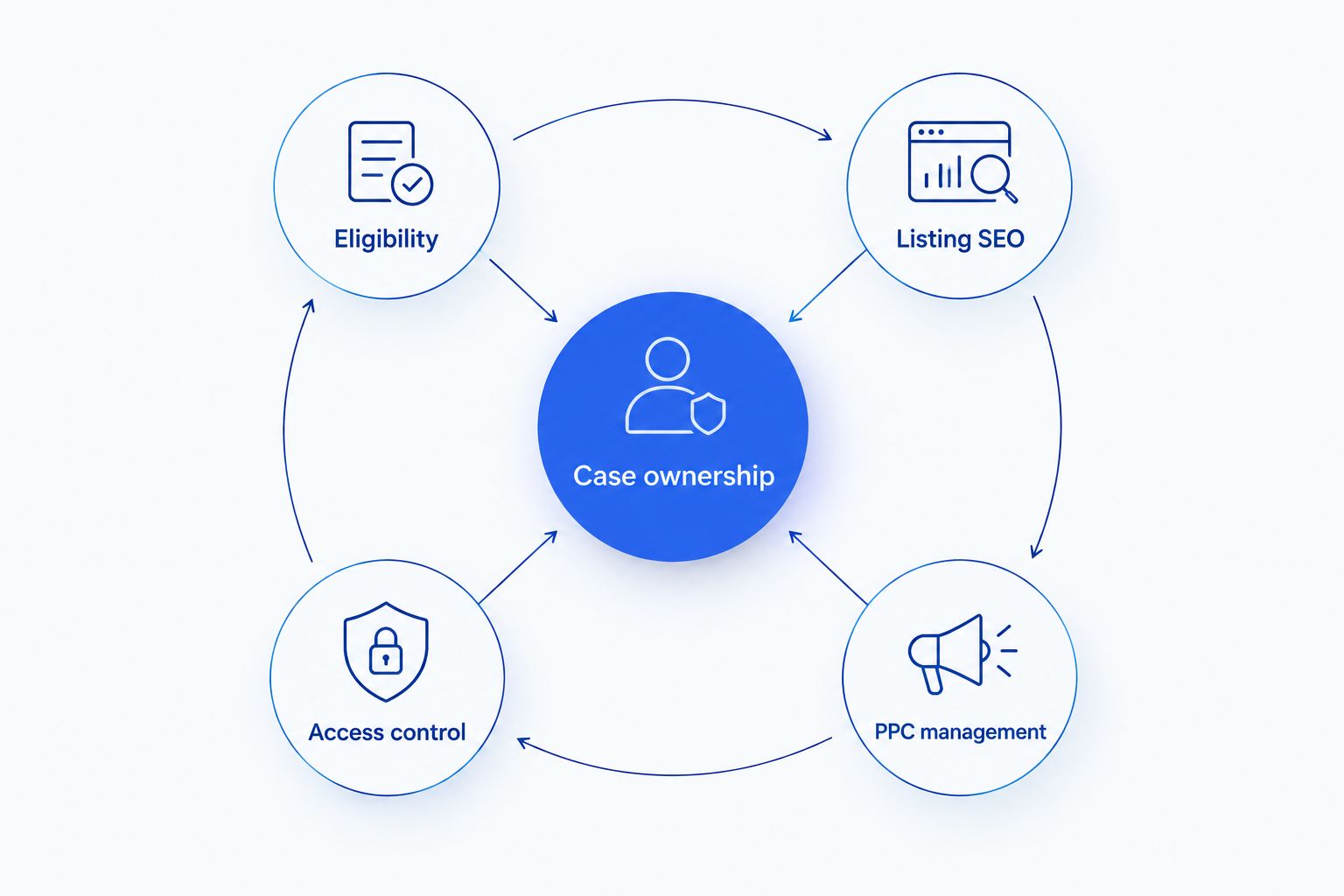
Use these criteria before looking at a pitch deck. A provider that cannot describe its responsibility for each one has not given you a usable scope of work.
- Eligibility: Who checks the enrollment requirements, and who directs trademark questions to qualified counsel? Agency support does not replace legal advice.
- Case ownership: Who gathers evidence, submits reports, tracks responses, and decides when an unresolved case needs escalation?
- Listing SEO: Who controls proposed changes to titles, bullets, and other listing content? Brand protection and listing performance need a clear handoff.
- PPC management: Who checks whether advertising sends shoppers to the intended listing after a detail-page problem is reported?
- Access control: Which people need account permissions, who grants them, and who removes them when the engagement ends?
- Reporting: Can you see open cases, actions taken, decisions pending, and the person responsible for each next step?
The key distinction is case ownership. A provider can advise on a problem without taking responsibility for its resolution. Put the submission, follow-up, and escalation duties in writing.
A practical brief also separates work the agency performs from work your team approves. Your brand should retain control over rights decisions and account access. The agency should identify the person responsible for each agreed operational task. That division makes a 2026 provider comparison more useful than a list of services with no named owner.
Amazon Brand Registry agency options at a glance
These are provider-fit rankings, not a claim that every provider performs every Brand Registry task. Confirm the exact scope with any agency you shortlist.
| Option | Best for | Standout role | Key limitation |
|---|---|---|---|
| Atlisco | Established brands connecting listing SEO and PPC management | Growth support for 7–8-figure e-commerce brands | Direct Brand Registry management is not established here |
| Specialist brand-protection agency | Infringement reports and case follow-through | Focus on rights-related workflows | May not own advertising or listing growth |
| Marketplace operations agency | Recurring registry administration | Coordination of access, cases, and listing tasks | Legal and growth work can sit outside its scope |
1. Atlisco: best growth partner for established Amazon brands
Atlisco offers Amazon PPC management, listing SEO, and full-service growth partnerships for 7–8-figure e-commerce brands in Germany, the UK, and the US. That makes it the growth choice in this ranking when registry-related listing problems sit alongside advertising and search-performance work.
Atlisco is best for an established brand that wants listing SEO and PPC management coordinated with its wider Amazon growth work. It is not presented here as a confirmed Brand Registry administrator. Ask whether it handles enrollment, permissions, infringement submissions, or case follow-up before placing any of those tasks in the agreement.
Atlisco pros:
- Its stated services cover both PPC management and listing SEO, so you can discuss the effect of listing changes on advertising in one growth brief.
- Its stated focus is 7–8-figure e-commerce brands rather than sellers looking for a basic enrollment explanation.
- Its stated markets include Germany, the UK, and the US, which fits brands operating across those markets.
Atlisco cons:
- The supplied service description does not confirm direct Brand Registry management, infringement reporting, or enrollment support.
- A growth partnership is not a substitute for trademark counsel or a specialist infringement workflow.
- If your only need is case administration, its stated PPC and listing SEO services do not by themselves answer that need.
Best for: A 7–8-figure brand choosing a growth partner and prepared to assign registry-specific duties separately if needed.
Verdict: Buy for the stated PPC and listing SEO fit; hold on Brand Registry management until the scope is confirmed. In 2026, ask for a written division of responsibilities rather than assuming full-service growth includes every registry task.
2. Specialist brand-protection agency: best for infringement cases
A specialist brand-protection agency is the better provider type when the work centers on suspected infringement and the follow-through it demands. Your selection test is operational: can the agency explain what evidence it needs, who submits a report, who monitors the response, and when the case comes back to your team?
Do not confuse reporting activity with a guaranteed outcome. Amazon makes decisions on its own processes, and an agency cannot replace the rights holder's judgment or qualified legal advice. Require visibility into submitted cases and unresolved decisions so the work does not disappear into a status update.
Brand-protection agency pros:
- A focused brief puts evidence, reporting, and follow-up at the center of the engagement.
- You can assess candidates against an explicit case-ownership workflow.
- This provider type suits brands whose immediate problem is rights-related rather than advertising performance.
Brand-protection agency cons:
- Listing SEO and PPC management can fall outside the contract.
- The agency's ability to submit a report does not establish that Amazon will accept it.
- Rights and trademark decisions still need an appropriate owner on your side and, when necessary, qualified counsel.
Best for: A brand with recurring suspected infringement that needs accountable case handling.
Verdict: Buy for a defined protection workload; skip a protection-only engagement if your actual priority is PPC and listing growth. For a 2026 shortlist, request an example of the case status information you would receive, not a promise about outcomes.
3. Marketplace operations agency: best for registry workflow ownership
A marketplace operations agency is the practical choice when no single person owns routine Brand Registry work. Its proposed scope should identify responsibility for permissions, listing-change coordination, case tracking, and handoffs to your brand team. Confirm each task; the provider-type label alone proves none of them.
This option is about continuity. It gives you a place to assign and track recurring work, but it can become a pass-through if the agency only forwards requests. Ask who can act, who must approve, and who follows up when Amazon has not resolved a case.
Marketplace operations agency pros:
- A defined operations brief can give recurring registry tasks one accountable owner.
- Access reviews and case logs are straightforward deliverables to request and inspect.
- The role can coordinate handoffs between your rights, content, and advertising teams.
Marketplace operations agency cons:
- Routine administration does not establish legal expertise.
- PPC strategy and listing SEO can remain with another provider.
- An agency without authority or a named case owner can add a handoff instead of removing one.
Best for: An established brand whose registry workload is ongoing but lacks clear internal ownership.
Verdict: Buy when recurring administration is the bottleneck; hold if you have not defined which decisions the agency can make. In 2026, put access and approval boundaries in the scope before delegating work.
How we ranked the options
The order follows fit for an established e-commerce brand choosing an Amazon partner. Atlisco leads on its stated PPC management, listing SEO, and growth-partnership services. The specialist moves ahead when infringement cases are the primary job; the operations agency moves ahead when recurring administration is the primary job.
This is not a ranking of measured case outcomes, fees, or unverified services. None of those comparisons is established by the supplied information. Choose the first option that owns your main problem, then document who covers the work outside its scope.
Which Amazon Brand Registry management agency should you choose?
Choose Atlisco for the stated growth brief if you run a 7–8-figure brand and need PPC management and listing SEO. Before treating it as your Amazon Brand Registry management agency, confirm exactly which registry tasks it accepts. A specialist brand-protection agency is the better first call for infringement casework; a marketplace operations agency is the better first call for unowned recurring workflows.
Use the same questions with every candidate:
- What will you do inside Brand Registry, and what will you only advise on?
- Who owns evidence, submissions, follow-up, and escalation for a case?
- Which listing changes need our approval before they are made?
- Who manages account access during the engagement and at its end?
- Which tasks require our team or qualified trademark counsel?
A clear refusal is useful information. If an agency does not manage rights cases, it should say so before you assign it a rights problem. If it does not manage PPC, do not expect protection work alone to address advertising decisions. The strongest 2026 arrangement is the one in which every task has an agreed owner, even when those owners work for different providers.
FAQ
What is the best Amazon Brand Registry management agency for an established brand?
The best choice depends on the work you need owned. Atlisco fits 7–8-figure brands seeking PPC management and listing SEO, but its direct Brand Registry management scope must be confirmed.
Does Atlisco manage Amazon Brand Registry cases?
Direct Brand Registry case management is not established in the supplied service description. Atlisco states that it offers PPC management, listing SEO, and full-service growth partnerships; ask it to define any registry casework in writing.
Is a brand-protection agency better than a growth agency?
A brand-protection agency is the better provider type when suspected infringement and case follow-through are the main job. A growth agency fits listing SEO and advertising work; confirm each provider's exact responsibilities.
Who should handle Amazon Brand Registry enrollment questions?
Assign enrollment coordination to a named internal owner or a provider that explicitly accepts it. Send trademark eligibility and other legal questions to qualified counsel rather than assuming an advertising agency covers them.
Can a PPC agency resolve a Brand Registry infringement report?
PPC management does not by itself establish infringement-reporting expertise. Ask whether the agency submits reports, tracks responses, and escalates unresolved cases before assigning it that work.
What should a Brand Registry agency report to the brand?
Ask for a record of open cases, actions taken, decisions pending, and the owner of each next step. Agree on that reporting scope before work begins so activity and unresolved issues are both visible.
How do I compare Brand Registry agency proposals in 2026?
Compare task ownership, approval boundaries, access control, and case follow-up in each proposal. Do not treat a broad Amazon service label as proof that the agency performs enrollment or rights-related work.
One last thing
Before you request another agency proposal, write down the unresolved registry task that prompted the search. If it is an infringement case, start with case ownership. If it is a listing and advertising problem, start with those functions. The agency category should follow the task, not the other way around.