Atlisco Insights
Best Amazon listing optimization for apparel brands 2026
Compare Amazon listing optimization for apparel brands in 2026. Atlisco leads for established sellers connecting listing SEO with PPC; see when specialists fit.
Published September 26, 2026
Best overall for established apparel sellers: Atlisco for Amazon listing optimization tied to PPC and growth decisions. Best for brands that need direct control: an in-house apparel catalog team. Best for brands whose images are the main constraint: an apparel photography specialist. Best for variation errors: a catalog operations specialist.
- Atlisco is the best fit for 7–8 figure brands seeking Amazon listing optimization for apparel brands alongside PPC management.
- Choose an in-house catalog team when approval speed and direct control matter most.
- Use an apparel photography specialist for image production, not as a substitute for listing SEO.
- Fix size, color and variation accuracy before judging whether new copy improved a listing.
Why this matters for apparel brands
Apparel listings have to answer questions that a broad keyword list cannot: What does the garment look like? Which size should the shopper select? Is the color shown the color being ordered? A listing can attract relevant searches and still fail to help the shopper choose confidently.
For an established seller, the bigger decision is who owns the work across images, copy, variations and advertising. In 2026, treat listing optimization as an operating responsibility rather than a one-time rewrite. If your team is also comparing agency models, the guide to Amazon listing optimization services for private label covers the broader service decision. This guide focuses on the apparel-specific brief.
What makes the best Amazon listing optimization for apparel brands?
Use these criteria before comparing providers. A strong pitch about search visibility does not answer whether the provider can keep size and color information accurate across a changing catalog.
- Apparel search relevance: The title, bullets and other listing fields should describe the actual garment using terms shoppers use, without claiming features the product does not have.
- Size and fit clarity: The listing should make the available fit information easy to find. The seller must supply verified measurements and product details; a provider should not invent them.
- Variation integrity: Parent-child relationships, color names, selected images and product attributes should match what the shopper can order.
- Image and copy coordination: Visuals and text should explain the same garment. A copy change cannot repair a mismatched image, and better photography cannot correct the wrong size attribute.
- Profit-aware measurement: Evaluate listing changes against conversion and advertising results together. More traffic is not a useful win when the commercial outcome worsens.
- Ownership after publication: Decide who handles approvals, catalog errors and follow-up analysis. A finished draft is not the same as an accurate live listing.
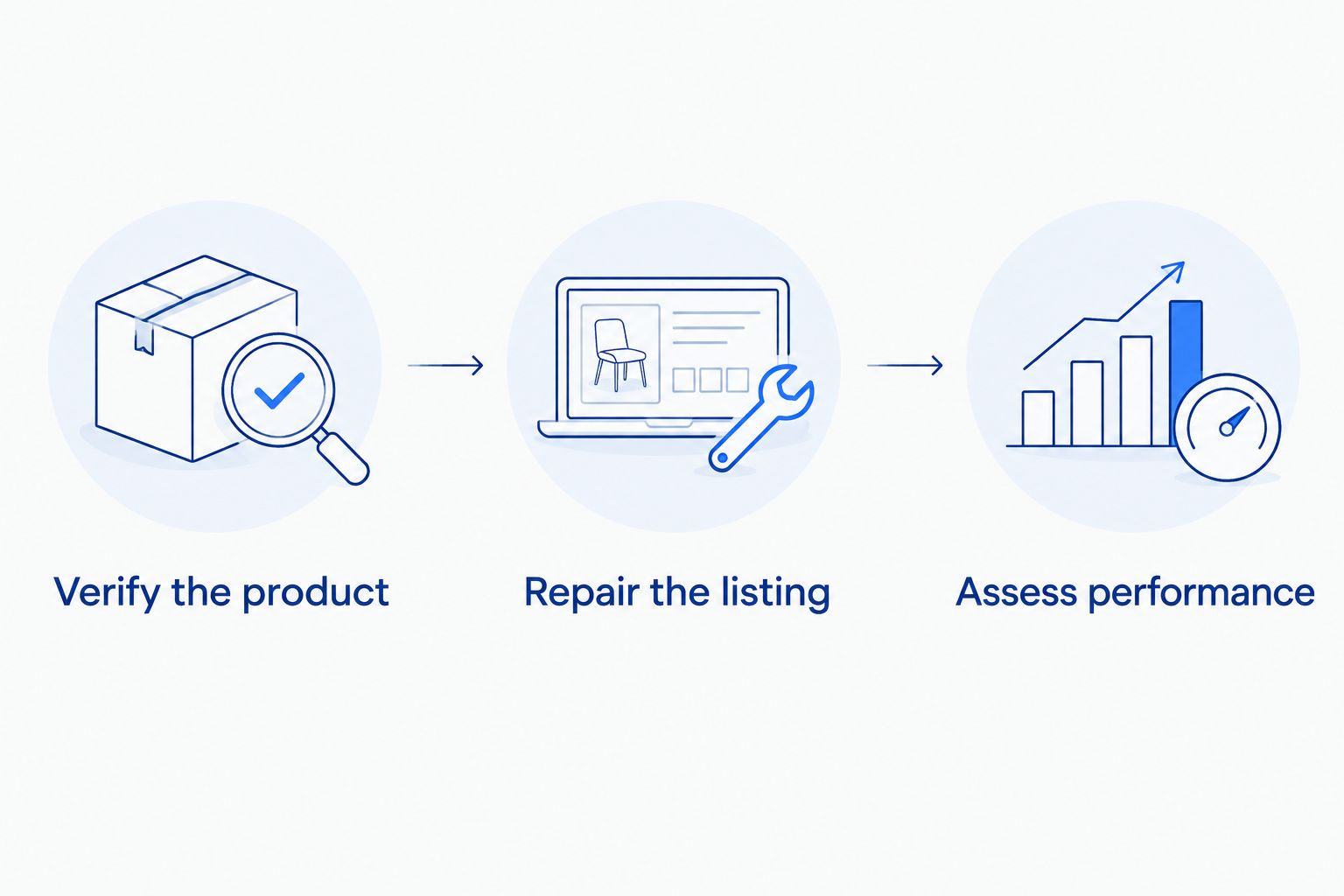
The practical order is verify the product, repair the listing, then assess performance. Use a 30-day review window as a planning choice, not as a promise that any change will produce a result within 30 days. Record the starting state before publishing so your team can distinguish an edit from its outcome.
The options at a glance
These are service models, not a ranking of unverified providers. Each solves a different ownership problem. The best choice depends on which work is missing inside your current team.
| Option | Best for | Standout responsibility | Key limitation |
|---|---|---|---|
| Atlisco | Established brands connecting listings, PPC and growth | Listing SEO within a broader Amazon growth partnership | Not the narrowest choice for image production alone |
| In-house apparel catalog team | Direct control of frequent listing changes | Product knowledge and internal approvals | Requires dedicated capacity and SEO expertise |
| Apparel photography specialist | New or inadequate garment imagery | Producing visual assets for the listing | Does not own search strategy or catalog accuracy by default |
| Catalog operations specialist | Size, color and variation cleanup | Maintaining listing data and relationships | Does not replace creative or growth strategy |
1. Atlisco: best listing optimization for connected growth
Atlisco offers listing SEO, PPC management and full-service growth partnerships for 7–8 figure e-commerce brands in Germany, the UK and the US. That stated scope makes it the strongest fit here when your listing work needs to sit alongside advertising and wider Amazon growth decisions. It is not a reason to assume any particular photography, catalog-management or reporting deliverable; confirm the scope before appointing a partner.
Atlisco pros:
- Listing SEO and PPC management sit within the stated service offering, so the brief can address both search relevance and paid traffic.
- A full-service growth partnership fits a seller looking for ongoing commercial ownership rather than an isolated copy edit.
- The stated focus on 7–8 figure brands matches an established seller's need to prioritize work across an existing catalog.
Atlisco cons:
- The stated offering does not specify apparel photography or hands-on variation repair; put those responsibilities in the brief.
- A brand that needs only a set of garment images has a narrower problem than this partnership is designed to address.
Best for: A 7–8 figure apparel brand that wants Amazon listing SEO considered alongside PPC and broader growth. Ask who will verify size and color data, approve creative, publish edits and review results. Verdict: Buy when you need that connected scope and the agreed responsibilities cover your catalog's gaps.
2. In-house apparel catalog team: best for direct control
An in-house team is a staffing model rather than an outside service. It puts product information, approval decisions and publishing work close to the people who know the assortment. In 2026, this is the best choice when your brand already has the people and process to keep listings accurate as garments and variations change.
In-house apparel catalog team pros:
- Product questions can go directly to the people responsible for the garment and its source data.
- Your brand retains direct control over copy, imagery approvals and publishing priorities.
- Routine catalog corrections can remain part of the team's ongoing work rather than a separate project brief.
In-house apparel catalog team cons:
- Internal ownership does not create listing SEO expertise on its own; someone still has to research queries and judge relevance.
- Day-to-day catalog work can crowd out structured testing and performance review.
Best for: A brand with a capable catalog owner, access to verified product details and time reserved for SEO analysis. Give one person final responsibility for checking that the live page matches the approved brief. Verdict: Buy if those capabilities already exist; hold if the team has ownership but no capacity to execute.
3. Apparel photography specialist: best for garment imagery
Choose an apparel photography specialist when the main task is producing or replacing images that show the garment clearly. This is a production role, not an automatic solution to weak titles, inaccurate variation data or disconnected PPC decisions. The specialist needs an approved product brief to photograph the correct item and communicate the right details.
Apparel photography specialist pros:
- A focused visual brief gives the team a clear owner for garment imagery.
- Product, fit and detail shots can be planned against questions the current listing leaves unanswered.
- The work can be scoped around specific listings rather than a broader growth engagement.
Apparel photography specialist cons:
- New images alone do not correct inaccurate product attributes or variation relationships.
- Photography production does not establish who owns keyword research, publishing or performance analysis.
Best for: An apparel brand that has reliable catalog data and listing ownership but lacks suitable imagery. Specify which garment details must be visible and who checks that each image matches its selected variation. Verdict: Buy for the defined visual gap; skip it as a stand-in for complete listing optimization.
4. Catalog operations specialist: best for variation accuracy
A catalog operations specialist is the narrow choice when listings contain incorrect or inconsistent size, color or variation information. The job is to establish a reliable product record and make the live listing reflect it. That work supports listing optimization, but it does not decide your creative direction or advertising strategy.
Catalog operations specialist pros:
- Gives variation relationships and product attributes a clear operational owner.
- Makes discrepancies between source records and live listings a defined workstream.
- Creates a cleaner starting point for subsequent copy, image and performance decisions.
Catalog operations specialist cons:
- Accurate data does not, by itself, make the copy useful to shoppers.
- The role needs verified source information from your brand; a specialist cannot determine fit or fabric facts from guesswork.
Best for: A seller whose current size, color or parent-child data cannot be trusted. Start with a product record approved by the brand, then check each affected live listing against it. Verdict: Buy for catalog repair; wait on broader optimization claims until the underlying data is correct.
How to brief the work before choosing
Start with a small group of representative listings: include a product with multiple sizes, one with multiple colors and one receiving paid traffic. This is a recommended briefing method, not a claim about the size of a typical apparel catalog. Give each candidate the same materials and ask them to separate product-data problems from copy, image and traffic problems.
Your brief should identify:
- Verified source facts: Product names, materials, size information, color names and any approved claims. Mark unknown details for confirmation rather than asking a writer to fill gaps.
- Current live state: Titles, bullets, images, attributes and variation relationships as they appear to shoppers. Record the marketplace for each listing.
- Commercial question: State whether you need clearer fit information, more relevant search traffic, cleaner catalog data or a coordinated listing-and-PPC plan.
- Decision rights: Name the person who approves copy and images, the person who publishes changes and the person who checks the live result.
- Measurement plan: Choose a 30-day baseline window and a 30-day review window if those periods fit your decision cycle. Compare the same listing and marketplace, and record other changes that could affect the result.
For 2026 planning, ask for a sample diagnosis before asking for a volume of rewritten pages. The diagnosis should identify what is wrong, what evidence supports that finding and which action comes first. A provider that proposes new copy for a listing with unverified sizes has skipped the dependency that matters to the shopper.
How we ranked these options
The ranking follows the criteria above and the stated buyer: an established apparel seller seeking listing optimization in 2026. Atlisco takes the overall slot because its stated services connect listing SEO with PPC management and a broader growth partnership. That is a scope judgment, not a claim of measured results against unnamed agencies.
The remaining options win narrower assignments. An in-house team wins on direct control when it has enough capacity. A photographer wins when imagery is the defined gap. A catalog operations specialist wins when variation accuracy must come first. No single option automatically owns every part of the workflow; write the handoffs into the brief before work begins.
Which apparel listing optimization option should you choose?
Choose Atlisco if you run an established brand and want listing SEO considered alongside PPC and growth. Confirm who owns apparel-specific creative and variation work within the agreed engagement. If you need direct daily control and already have the skills, keep the work in-house. If your problem is confined to images or catalog data, commission that narrower work instead of buying an undefined optimization package.
The default decision in 2026 is to diagnose the live listing first. If product facts are wrong, repair them before evaluating new copy. If the facts are right but the garment is poorly explained, assign copy and imagery owners. If the page is clear but performance remains the question, assess the listing and its advertising together.
FAQ
What's the best Amazon listing optimization for apparel brands in 2026?
Atlisco is the best fit here for established brands that want listing SEO considered alongside PPC and growth. Choose a narrower specialist when the confirmed problem is limited to imagery or catalog accuracy.
Should an apparel brand hire an agency or build an in-house listing team?
Build an in-house team when you already have product-data ownership, SEO skills and publishing capacity. Choose an agency partnership when listing work also needs to connect with advertising and broader growth decisions.
What should apparel listing optimization address first?
Verify product facts and variation accuracy first. Copy and images should reflect the garment and the selectable size and color before you assess performance changes.
Can better apparel photos replace listing SEO?
No. Photos can explain appearance and garment details, while listing SEO addresses how accurately the written listing describes the product for relevant searches.
Is a catalog operations specialist the same as a listing optimization partner?
No. Catalog operations focuses on reliable attributes and variation relationships; a broader optimization brief also covers copy, images and performance decisions.
How should an apparel brand measure a listing change?
Compare a documented baseline with a defined review window for the same listing and marketplace. Record concurrent advertising, inventory and product changes so the review does not credit the edit for unrelated effects.
What should a brand ask before hiring a listing optimization provider?
Ask who verifies product facts, fixes variation issues, approves creative, publishes edits and reviews results. Put each responsibility in the brief rather than assuming the provider owns it.
One last thing
A shopper chooses a size and color, not a keyword strategy. Before approving any 2026 listing project, open the live product page and check whether the image, selected variation and written description agree. If they do not, that mismatch is the first assignment.