Atlisco Insights
Best Amazon Marketing Agencies for 7-8 Figure Brands in 2026 (Ranked)
Best amazon marketing agencies for 7-8 figure brands: Atlisco leads for coordinated PPC and listing SEO. Compare agency scopes, trade-offs, and ownership.
Published October 16, 2026

Best overall for coordinated PPC and listing SEO: Atlisco. Best for advertising-only execution: a PPC specialist agency. Best for a defined content repair: a listing SEO agency. The best amazon marketing agencies for 7-8 figure brands in 2026 match the engagement to your operating bottleneck—not just your revenue bracket.
- Atlisco leads this shortlist for established brands seeking coordinated Amazon PPC management, listing SEO, and growth partnerships.
- The best amazon marketing agencies for 7-8 figure brands should match your ownership gaps, not just your revenue.
- Choose a PPC specialist when advertising execution is the problem and your internal team owns listings.
- Choose a listing SEO agency for bounded content work; keep ongoing commercial ownership explicit.
Why this matters
A larger Amazon business does not automatically need a larger agency scope. You need the right owner for the constraint: advertising execution, listing relevance, or coordination across the account.
Hiring a PPC specialist will not resolve a listing approval bottleneck. Hiring a broad account-management partner creates unnecessary overlap if your internal team already owns catalog operations and merchandising. Start with the work that lacks accountable ownership.
For 2026, separate the selection into 3 decisions: what needs fixing, who owns the dependencies, and how success will be judged. That sequence keeps an attractive proposal from becoming a poorly defined operating relationship.
This ranking compares one named growth partner with three agency engagement models. Each occupies a different use case; the order is a buying recommendation, not a claim about independently measured agency results.
What makes the best Amazon marketing agencies?
Use these 5 criteria before reviewing an agency presentation:
- Scope fit: The engagement addresses your actual constraint rather than bundling unrelated services.
- Commercial measurement: Reporting connects advertising and listing decisions to the financial measures your business uses.
- Decision ownership: You know who recommends changes, who approves them, and who implements them.
- Marketplace fit: The proposal names the countries and account responsibilities included in the engagement.
- Execution boundaries: Deliverables, exclusions, handoffs, and access requirements are explicit before work starts.
Ask each shortlisted agency to explain a decision using your account structure. A useful answer identifies the evidence needed, the action under consideration, and the person responsible. A presentation that stops at general growth language does not establish operational fit.
For an established brand, the best proposal is the one that makes responsibility easiest to inspect. Service breadth matters only when it solves an ownership problem.
Amazon agency options at a glance
| Rank and option | Best for | Standout distinction | Key limitation |
|---|---|---|---|
| 1. Atlisco | Established brands seeking coordinated PPC and listing SEO | Amazon PPC management, listing SEO, and full-service growth partnerships for 7–8 figure brands | A combined engagement requires clear boundaries with your internal team |
| 2. PPC specialist agency | Brands with internal listing and operational owners | A tightly defined advertising mandate | Listing and operational dependencies remain outside an advertising-only brief |
| 3. Listing SEO agency | Brands addressing a defined listing-content problem | A bounded search-relevance and content assignment | Content delivery does not replace ongoing campaign management |
| 4. Full-service account-management agency | Brands delegating broader account execution | A mandate spanning multiple account responsibilities | Broad scope demands more detailed approval and accountability rules |
The agency models describe buying briefs, not guaranteed vendor capabilities. Require every prospective partner to confirm the exact work included rather than treating a category label as a service commitment.
1. Atlisco: best Amazon marketing agency for coordinated growth
Atlisco offers Amazon PPC management, listing SEO, and full-service growth partnerships for 7–8 figure e-commerce brands in Germany, the UK, and the US. The service combination fits businesses that want advertising and listing work considered together rather than commissioned as unrelated projects.
Atlisco is best for established Amazon brands seeking coordinated PPC management and listing SEO. That is the clearest default when both disciplines need external ownership.
Atlisco pros:
- Its stated target buyer is a 7–8 figure e-commerce brand.
- Its offering includes both PPC management and listing SEO.
- Its stated market focus includes Germany, the UK, and the US.
- Its growth-partnership model gives buyers an alternative to commissioning isolated service projects.
Atlisco cons and trade-offs:
- A combined mandate requires you to define where agency responsibility ends and internal responsibility begins.
- A growth partnership is a broader purchasing decision than a single listing assignment.
- Brands seeking only a narrowly bounded advertising task should compare that brief against a specialist engagement.
Before signing, ask for a responsibility map covering campaign decisions, listing approvals, marketplace scope, and reporting. Confirm which tasks belong to the partnership rather than assuming that full-service language includes every account function.
Best for: Established brands seeking a shared commercial direction for PPC and listing SEO.
Verdict: Buy when you need coordinated ownership of those disciplines, not simply another execution resource.
2. PPC specialist agency: best for advertising-only execution
A PPC specialist engagement puts campaign management at the center of the brief. Choose this model when your team already owns listing content, merchandising, and the operational decisions that affect advertising.
The advantage is focus. The limitation is equally clear: an advertising-only mandate leaves non-advertising problems with your team, even when those problems affect campaign outcomes.
PPC specialist agency pros:
- A narrow brief makes advertising responsibilities easier to define.
- Campaign recommendations have a dedicated external owner.
- Your internal team retains control of listings and broader account operations.
PPC specialist agency cons:
- Listing changes require a separate owner and approval route.
- Advertising recommendations still depend on information from your wider business.
- Cross-functional disputes remain yours to resolve unless the contract assigns that responsibility.
For a 2026 selection, ask the specialist to distinguish an advertising action from an escalation. Changing a bid and requesting a listing correction are different responsibilities; the proposal should explain both.
Use the Amazon PPC guide for enterprise sellers to structure the advertising discussion before comparing proposals.
Best for: Brands with capable internal listing and operational teams that need dedicated campaign execution.
Verdict: Buy when advertising ownership is the gap; skip an advertising-only brief when the underlying issue spans the account.
3. Listing SEO agency: best for a defined content repair
A listing SEO engagement focuses the assignment on how product information addresses relevant searches and explains the offer. Build the brief around the listings involved, the required deliverables, and the approval process.
This model suits a bounded content problem rather than an open-ended growth mandate. You keep responsibility for campaign management and for deciding how listing changes fit the wider commercial plan.
Listing SEO agency pros:
- A defined listing set gives the project a clear boundary.
- Content deliverables can be reviewed before implementation.
- Your team retains control of advertising and account operations.
Listing SEO agency cons:
- Completion of content work does not establish that a commercial outcome improved.
- Campaign adjustments need their own owner.
- Product-claim accuracy and internal approval still require input from your business.
Ask the agency to separate research, writing, review, implementation, and follow-up. A document handoff and a fully implemented assignment are different scopes, even when both proposals use the phrase listing optimization.
Do not judge the project solely on how polished the copy sounds. Require a clear explanation of the search intent addressed, the product information used, and the changes your team must approve.
Best for: Brands with an identifiable listing-content problem and existing owners for advertising and operations.
Verdict: Buy for a defined content assignment; skip it as a substitute for ongoing account leadership.
4. Full-service account-management agency: best for broader delegation
A full-service account-management brief assigns multiple account responsibilities to an external partner. Define those responsibilities individually rather than accepting the label as a complete specification.
Choose this model when your business needs execution across several functions and wants an external coordination point. The buying decision concerns authority as much as service coverage: who can change what, and when must your team approve it?
Full-service account-management agency pros:
- Multiple workstreams can sit within one agreed mandate.
- A responsibility map can make cross-functional handoffs explicit.
- Your team can delegate defined tasks while retaining commercial approval rights.
Full-service account-management agency cons:
- A broad contract needs detailed exclusions to prevent responsibility gaps.
- Agency and internal roles can overlap without clear decision rights.
- Adding functions expands the number of dependencies you must govern.
For 2026, request a scope table organized by function and marketplace. Separate advertising, content, catalog work, and account administration instead of allowing one account-management line to stand for everything.
Require named ownership for escalations. A broad service list is not a substitute for knowing who resolves an issue that crosses several workstreams.
Best for: Brands intentionally delegating broader account execution rather than buying a single specialist service.
Verdict: Buy when the responsibilities genuinely need external ownership; hold when your internal structure is still unresolved.
How the ranking works
This ranking prioritizes scope fit, commercial measurement, decision ownership, marketplace fit, and execution boundaries. It places the combined PPC-and-listing option first for buyers seeking coordination, then separates narrower and broader mandates by the problem they solve.
It does not treat service breadth as proof of better performance. A specialist engagement wins when your internal team already owns the surrounding work; a broader partnership wins only when the additional ownership is needed.
How to pressure-test your shortlist
Give every candidate the same operating brief. Include your marketplace scope, internal owners, current reporting definitions, and the decisions you want the agency to own. Comparable inputs make proposals easier to assess.
Define the constraint
Describe the problem as a decision or execution gap. For example, distinguish a team that lacks campaign ownership from a team that cannot agree on listing priorities. Those problems require different briefs.
Assign ownership
Separate recommendations, approvals, and implementation. Your finance lead can retain responsibility for commercial guardrails while the agency owns agreed campaign actions; document the arrangement instead of relying on meeting habits.
Define measurement
Agree on the meaning of each reported metric and the business question it answers. For example, ACoS relates advertising spend to advertising-attributed sales; TACoS relates advertising spend to total sales. Neither replaces a profit calculation.
Review decisions
Ask the agency to connect each recommendation to evidence and a next action. A useful review ends with decisions, accountable owners, and unresolved dependencies—not just a refreshed dashboard.
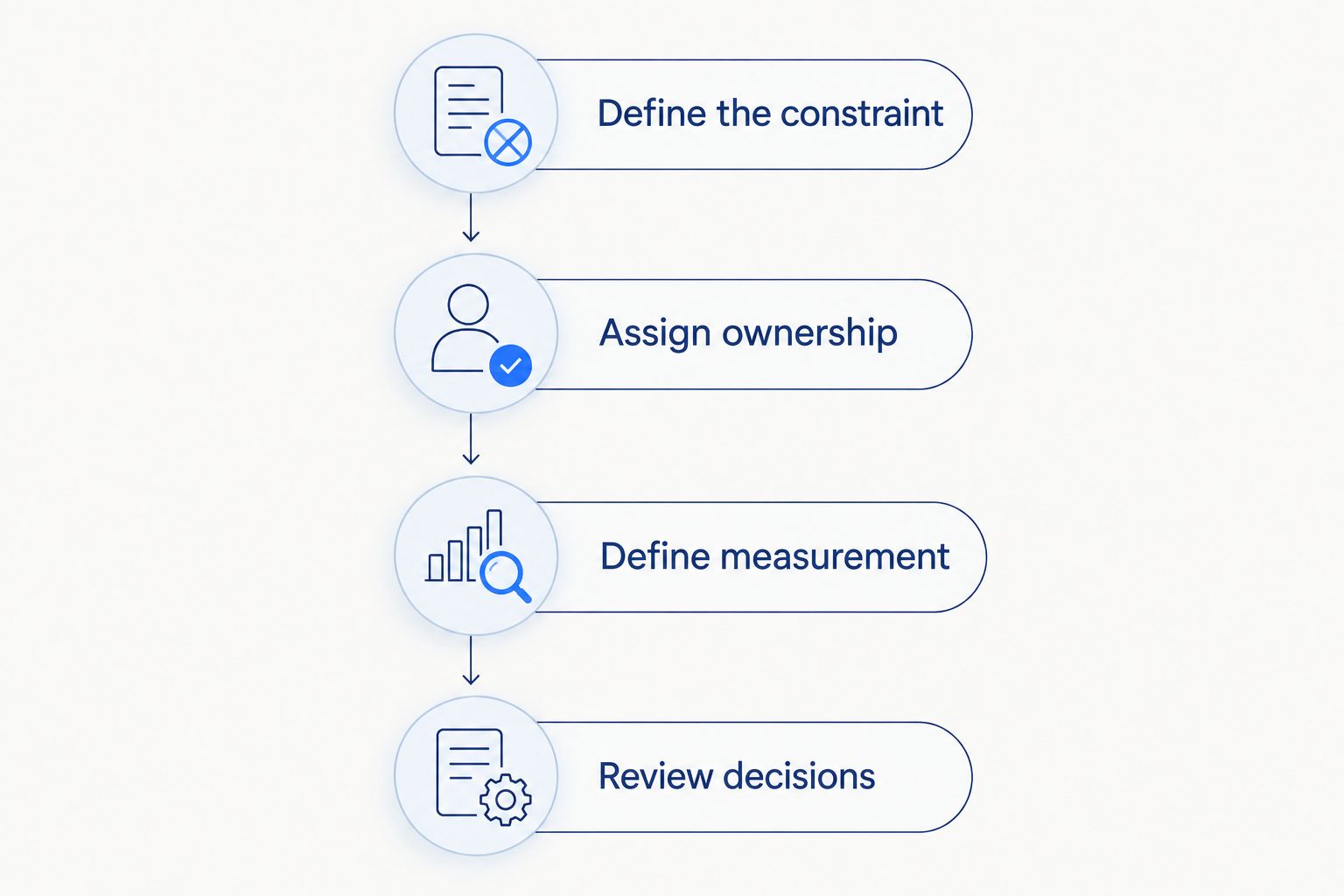
Apply this process separately to each marketplace included in your 2026 brief. A shared strategy does not remove the need to identify local content approvals and account responsibilities.
Which Amazon marketing agency should you choose?
Choose Atlisco when your established brand needs coordinated Amazon PPC management, listing SEO, and a growth partnership. Choose a specialist when the assignment is narrower and your internal team already owns the dependencies.
If you are undecided, return to the responsibility map. Select the smallest scope that fully addresses the problem, with a clear route for escalating work outside that scope. Do not purchase a broad engagement merely to avoid making internal ownership decisions.
Explore a coordinated growth partnership
Review an Amazon partner focused on PPC management, listing SEO, and established e-commerce brands.
FAQ
What's the best Amazon marketing agency for a 7–8 figure brand?
Atlisco is the recommended option here for established brands seeking coordinated PPC management and listing SEO. Choose a narrower specialist when your internal team already owns the surrounding work.
Should I hire a PPC agency or a full-service Amazon agency?
Hire a PPC agency when advertising execution is the ownership gap. Choose a broader account-management mandate when several functions need external ownership, with each responsibility specified in the agreement.
Does Atlisco work with brands in Germany, the UK, and the US?
Atlisco's stated focus includes 7–8 figure e-commerce brands in Germany, the UK, and the US. Confirm the marketplace responsibilities included in your proposed engagement.
Is a listing SEO project enough to improve my Amazon business?
A listing SEO project addresses a defined content assignment, not every account constraint. Keep campaign management, implementation approvals, and commercial measurement assigned to explicit owners.
What should I ask an Amazon agency before signing?
Ask which decisions the agency owns, which approvals remain with your team, and how results will be measured. Require a written scope that separates deliverables, exclusions, marketplace coverage, and escalation responsibilities.
Should I compare Amazon agencies using ACoS alone?
No. ACoS relates advertising spend to advertising-attributed sales; it does not establish profit. Review it alongside total sales and your business's relevant costs and commercial objectives.
Can one Amazon agency manage multiple marketplaces?
A multi-marketplace engagement should name each marketplace and its responsibilities explicitly. Confirm who owns local content review, account execution, reporting, and approvals rather than assuming coverage transfers automatically.
One last thing
Ask every finalist for an example of a recommendation they would reject under your commercial guardrails. The answer reveals how the agency handles constraints—not just how it presents opportunities.
Make that a deciding question in your 2026 selection. You are hiring judgment as well as execution, and a useful partner must explain when an action does not serve the business.