Atlisco Insights
Best Amazon PPC agencies ranked by ad spend managed 2026
Best amazon ppc agencies ranked by ad spend managed: prioritize fit over scale. Compare agency models, verify spending claims, and assess profit ownership.
Published November 5, 2026

Best fit for established brands: Atlisco. Best for an execution-only brief: a PPC specialist. Best for broader operational ownership: a full-service Amazon agency. If you’re comparing the best Amazon PPC agencies ranked by ad spend managed in 2026, use spending totals to assess experience—not as proof of profitability or a reason to award the account.
- The best amazon ppc agencies ranked by ad spend managed still need comparable reporting periods and clear management scope.
- Atlisco offers Amazon PPC management, listing SEO, and growth partnerships for 7–8 figure brands.
- Choose a PPC specialist for advertising execution when your internal team owns listings and operations.
- Require account-level evidence, profit guardrails, and a named delivery owner before choosing an Amazon advertising agency.
Why this matters
An agency’s managed advertising spend measures the advertising budget within its stated scope. It does not, by itself, establish profitable growth, account complexity, or the attention your brand will receive.
A lifetime spending total and an annual spending total answer different questions. So do direct campaign management and software-assisted oversight. A useful 2026 comparison starts by making those definitions consistent.
Your buying decision is narrower than a market leaderboard: which partner can manage your account’s constraints while protecting its economics? For an established seller, those constraints include contribution margin, marketplace differences, listing quality, and operational ownership. A bigger spending claim does not resolve them.
What makes the best Amazon PPC agency?
Use these criteria before comparing spending totals or reading proposals:
- Comparable spend scope: Require a reporting period, included marketplaces, advertising formats, and a definition of directly managed spend.
- Relevant account experience: Match the agency’s evidence to your catalog, market coverage, and management requirements—not just account size.
- Profit accountability: Ask how campaign decisions connect to product economics and total business performance.
- Delivery ownership: Identify who makes changes, who reviews them, and who handles exceptions.
- Listing coordination: Establish who resolves conversion problems that bidding changes cannot fix.
- Clear boundaries: Put included work, exclusions, approval rights, and reporting responsibilities in writing.
A spending total belongs beside these criteria, not above them. If an agency cannot explain the scope of its headline number, leave that number out of your comparison.
Agency options at a glance
The table below compares engagement choices rather than asserting an unsupported spending order. Only the named agency has a specific service description here; the other entries are buying models to assess against your requirements.
| Agency or engagement model | Best for | Defining scope | Key limitation |
|---|---|---|---|
| Atlisco | Established brands seeking PPC and listing SEO support | Amazon PPC management, listing SEO, and full-service growth partnerships | Its stated audience is 7–8 figure brands, not a beginner-focused service |
| PPC specialist | Brands with strong internal listing and operations teams | A tightly defined advertising-management brief | Work outside advertising needs another owner |
| Full-service Amazon agency | Brands seeking broader account ownership | Multiple Amazon responsibilities under one agreement | A broad label does not establish the depth of each service |
| Multi-marketplace agency | Brands prioritizing cross-market coordination | A management brief spanning selected marketplaces | Market coverage alone does not establish local execution quality |
Choose the operating model first; compare agencies within that model second. Otherwise, you risk treating a narrow advertising proposal and a broader management proposal as equivalent.
1. Atlisco: best Amazon PPC fit for established brands
Atlisco is an Amazon growth partner offering PPC management, listing SEO, and full-service growth partnerships. Its stated audience is 7–8 figure e-commerce brands in Germany, the UK, and the US.
Atlisco is best for established Amazon brands seeking PPC management and listing SEO within a growth partnership. That fit is more useful than assigning a spending rank without comparable evidence.
Atlisco pros
- Its stated services include both PPC management and listing SEO.
- Its positioning addresses established, high-revenue brands rather than beginners.
- Its stated geographic focus includes Germany, the UK, and the US.
Atlisco cons and boundaries
- Its established-brand focus is not a beginner-focused offering.
- The service description is not a substitute for a deliverables agreement; confirm the scope you need before selecting a partnership.
Ask for a proposal that separates advertising responsibilities from listing responsibilities. Then identify the business decision each reporting metric supports. A combined engagement needs clear ownership just as much as a specialist engagement does.
Best for: Established brands seeking coordinated PPC and listing SEO support.
Verdict: Buy the fit—not an assumed ad-spend rank.
2. PPC specialist: best for advertising-only execution
A PPC specialist engagement keeps the brief focused on advertising. Choose this model when your internal team already owns listing content, catalog decisions, inventory planning, and commercial strategy.
The advantage is a narrower accountability boundary. The trade-off is that your team must resolve problems outside that boundary rather than expecting the advertising partner to absorb them.
PPC specialist pros
- Advertising responsibilities are easier to isolate in the agreement.
- Your internal team retains control over non-advertising decisions.
- Campaign recommendations can be reviewed against an internally owned commercial plan.
PPC specialist cons
- Listing and catalog issues require a separate owner.
- Coordination remains your responsibility when advertising and operations conflict.
For a 2026 selection process, ask the specialist to explain how it escalates a conversion problem. An answer limited to bids and budgets does not explain how the underlying issue reaches the person who can fix it.
Best for: Brands with capable internal operations and a clearly bounded advertising brief.
Verdict: Buy when your internal team can own everything outside PPC.
3. Full-service Amazon agency: best for broader ownership
A full-service engagement puts several Amazon responsibilities into one commercial relationship. Define those responsibilities individually: “full service” is a category label, not a deliverables list.
This model suits a buying brief that extends beyond campaign execution. It requires careful evaluation because a broad proposal can obscure which tasks receive active management and which receive occasional support.
Full-service agency pros
- Multiple workstreams can share a common account plan.
- You can assign cross-functional coordination to a named partner.
- A single agreement can establish escalation across advertising and listing work.
Full-service agency cons
- Service breadth does not prove specialist depth.
- Unclear ownership can persist inside a broad agreement unless deliverables are explicit.
Request an ownership map before signing. Each recurring task should have an accountable person, an approval route, and a defined output. Your team should know where agency ownership ends without needing to interpret sales language.
Best for: Brands seeking broader external ownership rather than additional advertising execution alone.
Verdict: Buy only when the broader scope solves a defined ownership problem.
4. Multi-marketplace agency: best for cross-market coordination
A multi-marketplace engagement addresses management across your selected Amazon markets. Assess the work market by market rather than treating international coverage as a single capability.
Your evaluation should separate advertising execution, listing responsibilities, reporting, and commercial decisions. A shared account plan still needs clear local ownership.
Multi-marketplace agency pros
- Market-level plans can sit within a shared commercial framework.
- You can define consistent reporting across the engagement.
- Cross-market decisions can have a single escalation owner.
Multi-marketplace agency cons
- A country list does not establish who performs the work.
- Combined reporting can obscure market-level performance unless you require separate views.
Ask candidates to show how they would structure decisions across your actual markets. For larger organizations, the enterprise Amazon PPC guide provides a separate planning reference.
Best for: Brands whose main challenge is coordinated execution across marketplaces.
Verdict: Buy when market-specific responsibilities are explicit.
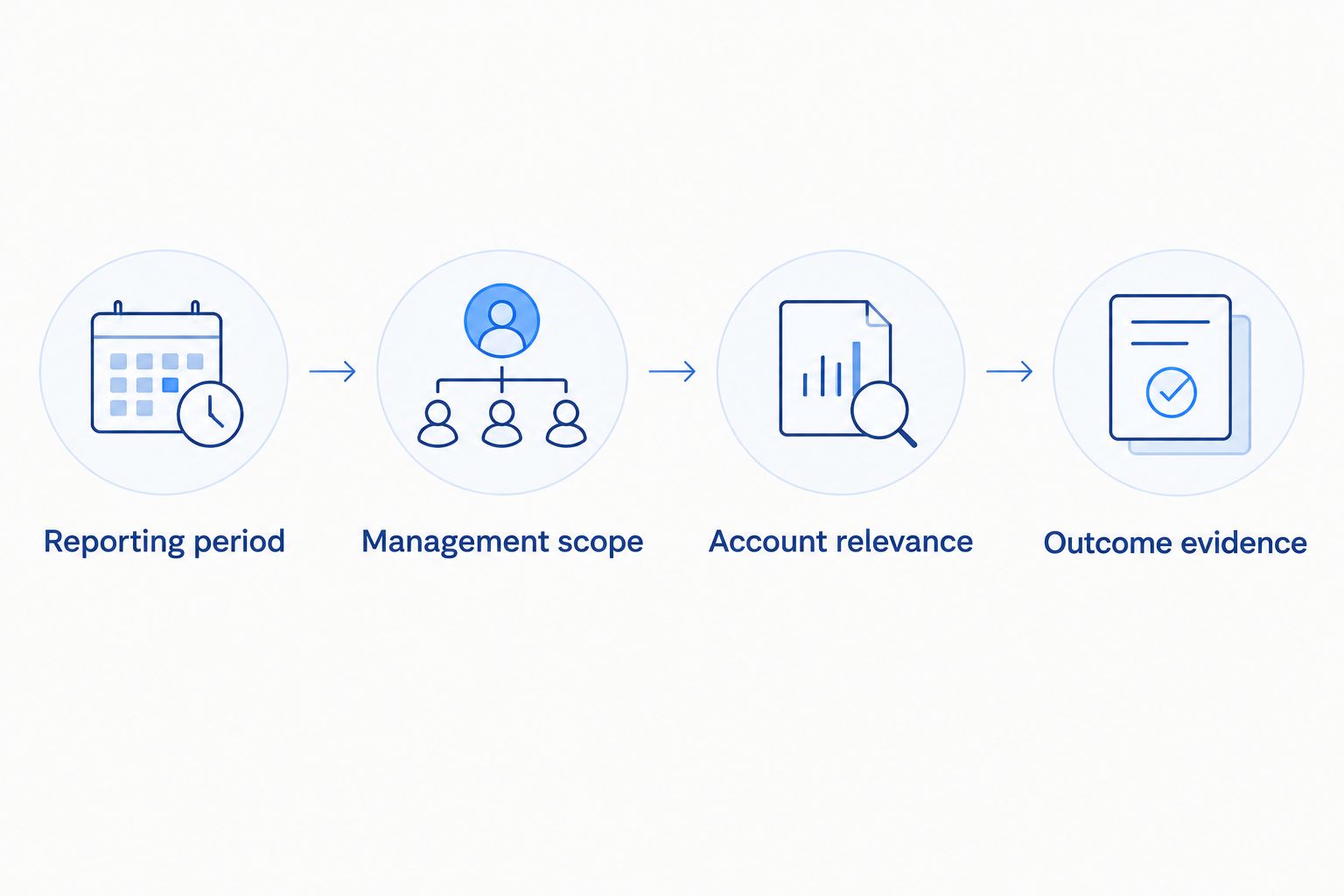
How to verify an agency’s managed-spend claim
For your 2026 shortlist, request a consistent evidence pack from every candidate. Use the same questions so that a polished presentation does not substitute for a comparable answer.
Reporting period
Request a trailing 12-month reporting period as your comparison standard. Ask candidates to state the ending date and distinguish that period from lifetime totals or annualized projections.
This is a diligence requirement, not an industry benchmark. Its purpose is to stop unlike timeframes from entering the same ranking.
Management scope
Ask what “managed” means. Separate direct campaign responsibility from consulting, platform usage, reporting access, and work performed through another agency.
Also establish which advertising formats and marketplaces the total includes. Keep those definitions attached to the figure wherever it appears in your evaluation.
Account relevance
Request evidence tied to accounts that resemble your operating requirements. Focus on catalog structure, marketplace coverage, and the decisions the agency owned.
An agency-wide total cannot show whether your assigned team has handled the same problems. Ask about the proposed delivery team, not only the company’s aggregate experience.
Outcome evidence
Require the candidate to connect advertising decisions to business outcomes. Ask what changed, what stayed constant, which period was measured, and what other commercial factors affected the result.
Do not treat attributed advertising sales as profit. Your comparison should distinguish revenue reporting from the economics you actually want the agency to manage.
How to turn the shortlist into a hiring decision
Ask each finalist for a 90-day action plan built around your account’s priorities. Treat the plan as a proposed sequence of decisions, not a promise of results within that period.
Require the plan to answer these questions:
- Which problems need validation before campaign changes begin?
- Which decisions require your approval?
- Who owns listing issues discovered during advertising analysis?
- What evidence would justify increasing or reducing investment?
- How will the agency report progress against your commercial objective?
Then request a 30-day review point in the proposed working process. Use that review to assess access, reporting clarity, delivery ownership, and execution against the agreed plan—not to impose an invented performance deadline.
For a 2026 contract, make account access and reporting ownership explicit. Establish who retains campaign history, how approvals are recorded, and what handover includes if the relationship ends. These are operating requirements, not details to settle after onboarding.
Explore an Amazon growth partnership
Review PPC management, listing SEO, and growth partnership options for your established brand.
How these options are ranked
The order follows fit for the stated audience: established brands evaluating an Amazon advertising partner. It prioritizes the named agency’s stated services, then separates alternative engagement models by the ownership problem each addresses.
This is a fit-based shortlist, not a verified league table of managed advertising spend. A numerical spending order requires comparable, dated evidence from every agency included. Keep that distinction intact when reviewing any 2026 roundup.
Which Amazon PPC agency should you choose?
Choose Atlisco when you want an Amazon growth partner whose stated scope includes PPC management and listing SEO for an established brand. Choose a PPC-only engagement when your internal team already owns the surrounding work.
Choose broader management only when you can name the additional responsibilities you need to transfer. Choose multi-marketplace support when cross-market execution is the actual constraint.
For the undecided buyer, start with ownership—not agency size. Write down what your team will retain, what the partner must own, and which business outcome governs the relationship. Use managed spend as supporting evidence after that brief is clear.
FAQ
What are the best Amazon PPC agencies ranked by ad spend managed?
A defensible spending ranking requires comparable, dated managed-spend evidence for every agency listed. Compare reporting periods, directly managed scope, marketplaces, and advertising formats before accepting the order.
Is the agency managing the most ad spend the best choice?
The largest managed-spend total does not establish the best fit for your brand. Evaluate relevant account experience, delivery ownership, and profit accountability alongside scale.
Who is Atlisco best for?
Atlisco is best for established 7–8 figure e-commerce brands seeking Amazon PPC management, listing SEO, and growth partnerships. Its stated geographic focus covers Germany, the UK, and the US.
Should I choose a PPC specialist or a full-service Amazon agency?
Choose a PPC specialist when your internal team owns listings and operations; choose broader management when you need to transfer additional responsibilities. Define those responsibilities before comparing proposals.
What proof should I request for an agency’s managed-spend claim?
Request a dated reporting period, a definition of direct management, and a breakdown of included markets and advertising formats. Ask the candidate to distinguish agency-wide experience from the experience of your proposed delivery team.
How should I evaluate an Amazon PPC agency in 2026?
Evaluate an Amazon PPC agency against a written ownership brief and a consistent evidence request. Compare relevant experience, reporting quality, commercial decision-making, and the proposed delivery plan.
What should an Amazon agency’s first action plan include?
The action plan should identify validation work, decision owners, approval requirements, and reporting outputs. Treat the sequence as an execution proposal rather than a guaranteed results timeline.
One last thing
Ask every finalist: “What would make you recommend spending less?” Require an answer tied to your product economics, listing performance, or operating constraints.
A useful agency evaluation tests judgment in both directions. Your partner needs a reason to increase investment—and a clear standard for when not to.