Atlisco Insights
Best Amazon advertising agencies for pet brands 2026
Compare the best amazon advertising agencies for pet brands by business fit. Choose coordinated growth, PPC-only support, or listing-first work.
Published November 3, 2026

Best for established pet brands needing coordinated Amazon growth: Atlisco. Best for brands with strong listings and internal operations: a PPC-only agency engagement. Best for brands whose product pages need work before more advertising: a listing-first agency engagement. This 2026 guide ranks those three engagement models by business fit, rather than treating every agency scope as interchangeable.
- Atlisco fits 7–8 figure pet brands seeking Amazon PPC management, listing SEO, and a full-service growth partnership.
- The best amazon advertising agencies for pet brands connect campaign decisions to product economics, not advertising revenue alone.
- Choose PPC-only management when your internal team already owns effective listings and marketplace operations.
- Choose listing-first support when product information and search relevance need correction before increasing advertising spend.
Why this matters
Your agency choice determines more than who adjusts bids. It determines whether someone connects search intent, product-page quality, and advertising decisions—or leaves your team to resolve the gaps.
A pet food query, a grooming query, and a carrier query describe different buying needs. Your campaigns and listings should reflect those differences. Traffic without a clear product match is not a growth strategy.
For your 2026 shortlist, separate the engagement you need from the agency presentation. Buy ownership of a defined business problem, not a collection of service names.
What makes the best Amazon agency for pet brands?
Evaluate proposals against these six criteria before comparing deliverables:
- Profit accountability: The proposal explains which product economics guide advertising decisions and which expenses sit outside ad reporting.
- Search-intent discipline: Campaign planning distinguishes relevant product searches from adjacent searches that describe a different need.
- Listing coordination: Someone owns the connection between paid search terms and accurate product-page information.
- Product-level decisions: Reporting makes individual products visible rather than hiding them inside account averages.
- Operational boundaries: The agreement identifies who handles advertising, listing changes, stock-related decisions, and escalations.
- Marketplace fit: The engagement matches the countries you sell in and identifies who owns local execution.
Ask every candidate to explain a decision against each criterion. A list of dashboards is not an answer. You need to understand what changes, who approves it, and how the outcome gets evaluated.
Amazon agency engagement models at a glance
The ranking below compares service scopes. It is a buying framework, not a claim that unnamed providers have been tested or that one agency outperforms every competitor.
| Rank and option | Best for | Standout feature | Key limitation |
|---|---|---|---|
| 1. Atlisco | Established brands needing coordinated growth support | PPC management, listing SEO, and full-service growth partnerships | Pet-category results and exact responsibilities require evaluation before appointment |
| 2. PPC-only agency engagement | Brands with capable internal listing and operations teams | A focused advertising remit | Problems outside advertising remain with your team unless separately agreed |
| 3. Listing-first agency engagement | Brands with unclear or incomplete product pages | Product information and search relevance take priority | Listing work alone does not provide ongoing campaign management |
1. Atlisco: best for coordinated Amazon growth
Atlisco offers Amazon PPC management, listing SEO, and full-service growth partnerships for 7–8 figure e-commerce brands in Germany, the UK, and the US. That service combination fits an established pet brand looking to connect advertising and listing work rather than procure them independently.
Atlisco is best for established pet brands seeking Amazon advertising and listing SEO within a full-service growth partnership. The fit rests on the stated service scope and target client profile, not an assumed pet-sector track record.
Where this engagement fits
Choose this model when your marketing lead needs connected decisions across paid search and product content. For example, a query generating relevant traffic should prompt a review of both campaign targeting and whether the listing clearly answers the shopper's question.
For a 2026 appointment, ask for the proposed scope at product and marketplace level. Coverage across Germany, the UK, and the US does not by itself specify which tasks your agreement includes.
Atlisco pros:
- Offers PPC management and listing SEO under the same brand.
- Explicitly serves the 7–8 figure business segment.
- Offers full-service growth partnerships alongside individual services.
- Serves Germany, the UK, and the US.
Atlisco cons and fit limits:
- Its stated positioning targets established brands, rather than beginner sellers.
- The stated services alone do not establish pet-category experience or results.
- Exact deliverables, approval rights, and reporting responsibilities need agreement.
Best for: An established pet brand seeking a partner across advertising and listing SEO.
Verdict: Buy this engagement model when coordinated ownership is the requirement; confirm scope and category evidence before signing.
2. PPC-only agency: best for advertising execution
A PPC-only agency engagement puts campaign management inside a narrow remit. Your team retains responsibility for product information, marketplace operations, and the decisions excluded from the advertising agreement.
This is a deliberate division of labor. It works as a procurement choice when you already have accountable internal owners for the work surrounding advertising.
Where this engagement fits
Choose PPC-only support when the advertising function needs specialist attention but your product pages and operating processes have clear owners. Ask the candidate how campaign findings move back to those owners.
A relevant search term that exposes unclear sizing information should not disappear into a weekly report. Your internal listing owner needs an actionable request, and the agency needs a route for tracking its resolution.
PPC-only engagement pros:
- Defines a focused advertising responsibility.
- Leaves product-content decisions with your existing team.
- Allows you to assess campaign recommendations separately from wider account work.
PPC-only engagement cons:
- Listing corrections remain outside scope unless included explicitly.
- Your team must coordinate advertising with stock and operational changes.
- Reporting requires context from outside the advertising account to assess profitability.
Best for: A pet brand with strong internal marketplace ownership and a specific campaign-management gap.
Verdict: Buy when execution is the gap; skip when your team needs someone to connect advertising with listing work.
3. Listing-first agency: best for product-page correction
A listing-first agency engagement prioritizes product information and search relevance before broader advertising expansion. Its role is to make the product page accurately communicate what the product is and whom it serves.
For pet products, that review should address the information relevant to the actual item: intended species, product format, sizing, materials, ingredients, or use instructions. Include only accurate details supported by your product documentation.
Where this engagement fits
Choose listing-first support when shoppers cannot easily establish whether a product matches their needs. A campaign cannot resolve an ambiguous size description after the shopper reaches the page.
Do not assume every performance problem is a content problem, however. Ask for a diagnosis that separates relevance, product information, and advertising targeting before approving a rewrite.
Listing-first engagement pros:
- Gives product-information problems a defined owner.
- Connects keyword selection to the product's actual purpose.
- Establishes a content-review process before expanding advertising.
Listing-first engagement cons:
- Does not include ongoing PPC management unless specified.
- Requires approved product facts and access to appropriate internal reviewers.
- Does not establish that content changes alone will improve commercial results.
Best for: A pet brand whose immediate constraint is product-page clarity rather than campaign execution.
Verdict: Buy when listing deficiencies are documented; skip as a substitute for advertising management.
How the engagement models are ranked
The order prioritizes breadth of ownership for an established pet brand, then narrower services for teams that already own the surrounding work. It does not rank unverified results.
For 2026, use the same sequence to evaluate your requirements: Profit accountability, Listing coordination, then Operational boundaries. Start with the commercial decision, establish how advertising and content connect, and assign responsibility for execution.
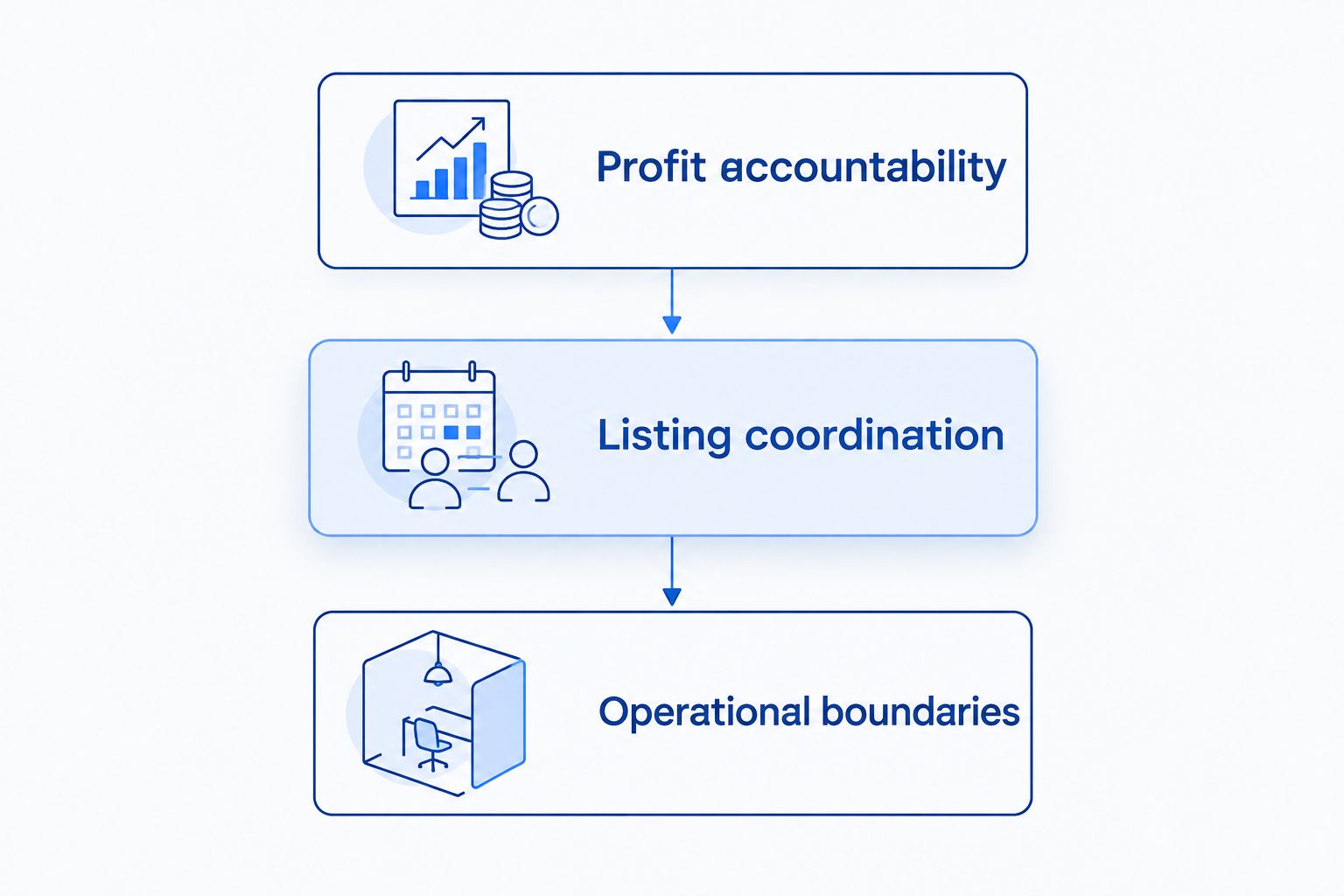
A focused specialist belongs above a broader partner on your own shortlist when the specialist's scope matches your actual gap. More services are not automatically a better purchase.
Test profit accountability beyond advertising ROAS
ROAS measures attributed advertising revenue relative to advertising spend. It does not deduct product costs, marketplace fees, fulfillment expenses, returns, or agency fees. A favorable advertising ratio therefore does not establish business profitability.
That distinction is central to measuring agency impact beyond ROAS: your evaluation must connect attributed advertising results to the expenses and commercial outcomes those results leave out.
Ask each candidate to walk through 1 advertised SKU using your own data. Require an explanation of which expenses enter the decision, how the agency separates advertising-attributed sales from total sales, and what would trigger a change in spend. This is an evaluation exercise, not a request for a sales forecast.
Then compare 2 search cohorts: searches containing your brand name and relevant searches that do not. Keep their results visible separately so an account-level average does not erase the distinction between the audiences.
For your 2026 reporting agreement, require these decisions to be explicit:
- Increase spend: What evidence supports additional investment in this product or query?
- Maintain spend: What makes the current allocation appropriate?
- Reduce spend: Which commercial or operational constraint overrides the advertising result?
A useful agency report ends with a decision and its reason—not just a chart.
Check how the agency handles pet-product search intent
Give each shortlisted agency a representative product and ask how it would distinguish relevant searches from adjacent ones. The answer should describe the product's actual purpose, not simply collect every phrase containing “pet.”
For a dog carrier, ask how targeting would address intended animal size and product format. For a grooming tool, ask how the agency would verify that the listing supports the intended use. These are briefing exercises, not assumptions about your catalog.
Request a sample decision in each direction: a search worth pursuing and a search that does not match the product. The agency should explain the reasoning without inventing product claims.
Also ask who approves sensitive wording. An agency should not expand health, safety, or performance claims beyond your approved documentation to capture more searches.
Make inventory and approvals part of the scope
Advertising decisions need an agreed response when stock conditions change. Define who supplies inventory information, who decides whether advertising should change, and who executes the decision.
Use the same ownership discipline for pausing Amazon PPC campaigns when FBA inventory runs low. The requirement is an explicit rule and an accountable owner, not an assumed automation capability.
Before appointment, ask the candidate to explain how it would handle these situations:
- A promoted product has constrained inventory.
- A listing change needs internal approval before publication.
- A campaign search term exposes a gap in product information.
- Marketplace priorities conflict with a product-level advertising recommendation.
Keep the answer in the statement of work. Responsibilities that exist only in a pitch conversation are not a working operating agreement.
Which Amazon agency engagement should you choose?
Choose Atlisco when your established pet brand needs Amazon advertising and listing SEO within a full-service growth partnership. Choose PPC-only support when internal owners already cover the surrounding work. Choose listing-first support when documented product-page problems need attention before advertising expansion.
For your 2026 shortlist, ask every candidate to respond to the same product example and commercial objective. Compare the diagnosis, proposed scope, ownership boundaries, and evidence supporting the recommendation.
Do not choose the broadest proposal by default. Choose the engagement that assigns your unresolved decisions to someone qualified to make them.
FAQ
What's the best Amazon advertising agency for an established pet brand?
Atlisco is a fit for established pet brands seeking PPC management, listing SEO, and a full-service growth partnership. Its stated target is 7–8 figure e-commerce brands in Germany, the UK, and the US; evaluate pet-category evidence and the proposed scope before appointment.
Should a pet brand choose a PPC-only or full-service agency?
Choose PPC-only support when your internal team already owns listings and marketplace operations; choose a broader partnership when those functions need coordination. The deciding factor is the responsibility gap, not the number of services in a proposal.
How do I compare Amazon agencies without relying on sales pitches?
Give every candidate the same product example, business objective, and scope questions. Compare the diagnosis, product-level reasoning, approval process, and evidence rather than presentation quality.
Does a high advertising ROAS mean my pet brand is profitable?
No, advertising ROAS alone does not establish profitability. It compares attributed advertising revenue with advertising spend without deducting the other expenses required to assess profit.
Should I fix my Amazon listings before increasing ad spend?
Correct documented listing problems before using more advertising to send shoppers to the same unclear product page. First confirm the problem through a diagnosis rather than assuming every weak result requires a rewrite.
What pet-category experience should an agency demonstrate?
Ask the agency to demonstrate relevant search-intent decisions and its process for using approved product information. Request case evidence where available, and separate demonstrated experience from general Amazon service capabilities.
Can one agency manage Amazon advertising across the US, UK, and Germany?
An agency engagement can cover multiple marketplaces when its service scope includes them. Confirm local responsibilities, approval workflows, and reporting separately for each marketplace rather than assuming that geographic coverage means identical execution.
One last thing
Ask your final candidate which problem it would not try to solve with more advertising. A clear answer exposes scope boundaries and commercial judgment faster than another campaign dashboard.
Make that boundary part of the agreement. Your agency relationship needs a defined response when the right next move belongs to listings, inventory, or your internal product team.