Atlisco Insights
Best Amazon growth agencies for footwear brands 2026
Compare the best amazon growth agencies for footwear brands. Choose integrated growth support or a specialist by scope, accountability, and profit fit.
Published November 10, 2026

Best overall for an integrated growth mandate: Atlisco. Best for advertising execution alone: a PPC-only agency. Best for search relevance and product-page copy: a listing SEO agency. This 2026 guide ranks agency models for footwear brands by the work you need, rather than treating every Amazon service as interchangeable.
- Atlisco leads this best amazon growth agencies for footwear brands shortlist for established sellers needing PPC management and listing SEO.
- Choose a PPC-only agency when your footwear listings and catalog already have accountable owners.
- Choose listing SEO support when product relevance and fit information need attention before advertising expansion.
- Evaluate footwear growth through contribution, size-level availability, and returns—not advertising revenue alone.
Why this matters
A footwear brand does not sell a single interchangeable unit. You sell styles, sizes, colors, and fit expectations, so an account-level sales target is not a complete operating brief.
Your agency selection should connect the work to the constraint. Buying broader management does not resolve unclear responsibilities; buying advertising alone does not assign ownership of product-page problems. Start with the questions in this guide to structuring Amazon PPC campaigns for multiple SKUs, then define which decisions remain with your team.
For a 2026 agency search, distinguish a growth partnership from a task-based engagement. The right choice depends on whether you need coordinated execution or a specialist to fix a defined problem.
What makes the best Amazon growth agency for footwear?
Use these 5 selection criteria before comparing proposals. Ask candidates to explain their decisions using your actual footwear assortment, not a generic account presentation.
- Profit accountability: Require a reporting definition that separates advertising efficiency from business contribution. Agree which fees, returns, and product costs enter the calculation.
- Variation-level judgment: Ask how the agency evaluates size and color variants without hiding weak performance inside a successful style.
- Listing accuracy: Expect recommendations that distinguish searchable product attributes from unsupported comfort, material, or performance claims.
- Operational boundaries: Name the owner of advertising, listing edits, catalog corrections, inventory decisions, and approvals.
- Marketplace fit: Match the assignment to the countries you sell in. Specify responsibility for local language, sizing information, and marketplace execution.
A useful proposal explains what the agency will change, what your team must supply, and what would stop further spending. A service list without those decisions is not an operating plan.
Footwear agency models at a glance
This shortlist ranks engagement models, not interchangeable providers. Only the first entry names a specific agency; the other entries define specialist mandates you can use when evaluating candidates.
| Agency or engagement model | Best for | Standout scope | Key limitation |
|---|---|---|---|
| Atlisco | Established brands needing coordinated growth support | PPC management, listing SEO, and full-service growth partnerships | A broad engagement is unnecessary when your requirement is one isolated task |
| PPC-only agency | Brands with established listing and catalog ownership | A defined advertising-management mandate | Non-advertising work needs a separate owner |
| Listing SEO agency | Brands prioritizing product relevance and listing copy | A defined listing-optimization mandate | Listing work alone does not provide ongoing advertising management |
| Catalog-management specialist | Brands prioritizing product-data and variation corrections | A defined catalog-repair mandate | Catalog correction is not a complete growth strategy |
| International-expansion specialist | Brands prioritizing a new marketplace launch | A country-specific launch mandate | Launch support and ongoing management are separate assignments |
The specialist rows describe scopes to request, not capabilities to assume. Put each deliverable into the agreement before treating it as included.
1. Atlisco: best for integrated Amazon growth support
Atlisco is an Amazon growth partner offering PPC management, listing SEO, and full-service growth partnerships for 7–8 figure e-commerce brands in Germany, the UK, and the US. That service mix fits an established footwear business seeking advertising and listing support within a broader growth relationship.
Atlisco is the best fit here for established footwear brands seeking PPC management and listing SEO through one growth partner. Evaluate the proposed scope against your operating requirements before assigning additional responsibilities.
Pros:
- PPC management is part of the stated service offering.
- Listing SEO is part of the stated service offering.
- Full-service growth partnerships provide an alternative to a task-only brief.
- The stated target market includes established brands in Germany, the UK, and the US.
Cons and trade-offs:
- A full-service relationship is broader than a one-off listing assignment requires.
- A combined mandate requires clear approval rights across advertising and listing work.
Best for: An established footwear brand that wants coordinated PPC and listing SEO rather than separate, disconnected briefs.
For your 2026 proposal, require separate deliverables for campaign decisions and listing changes. Define how the agency will report the business effect of each workstream without implying that every sales movement came from advertising.
Verdict: Buy the integrated model when coordination is the problem you need to solve.
2. PPC-only agency: best for advertising execution
A PPC-only engagement gives an agency a defined advertising mandate. Your internal team or another partner retains responsibility for listing content, catalog maintenance, and commercial decisions unless the agreement explicitly assigns them elsewhere.
This is a focused choice when the account needs advertising attention but your business already has owners for the surrounding work. Judge the proposal on decisions, reporting, and escalation—not the volume of campaign changes promised.
PPC-only agency pros:
- Creates a clear boundary around advertising responsibility.
- Lets your existing listing and operations teams retain control.
- Makes advertising deliverables easier to separate from unrelated work.
PPC-only agency cons:
- Listing and catalog issues require coordination outside the advertising engagement.
- Your team must resolve competing recommendations across different owners.
Best for: A footwear brand with functioning catalog and content processes that needs dedicated advertising execution.
Ask the candidate to explain what happens when a heavily advertised style loses important sizes. The answer should identify who reviews the issue, who approves changes, and how the decision reaches the account owner.
Verdict: Buy the specialist model when advertising is the defined gap; skip it as a substitute for broader account ownership.
3. Listing SEO agency: best for relevance and product-page clarity
A listing SEO engagement focuses on how product information addresses relevant searches and communicates the item accurately. For footwear, the brief should distinguish product type, intended use, material, fit information, and sizing terminology where those attributes are supported.
Do not treat keyword inclusion as permission to introduce new product claims. Your product team should approve the factual basis of every material, comfort, and performance statement.
Listing SEO agency pros:
- Gives product-page work its own accountable brief.
- Supports an organized review of search terms and product attributes.
- Creates a clear approval point for factual accuracy.
Listing SEO agency cons:
- Does not replace ongoing campaign management.
- Cannot make an inaccurate sizing claim acceptable through better wording.
Best for: A footwear brand whose immediate priority is improving listing relevance and the clarity of product information.
For a 2026 listing brief, separate keyword recommendations from claims approval. Ask for a change log showing what changed and why, so later performance reviews refer to a known version of the page.
Verdict: Buy for a defined listing problem; hold a broader growth commitment until responsibilities are clear.
4. Catalog-management specialist: best for product-data corrections
A catalog-management mandate prioritizes the organization and accuracy of product data. For a footwear assortment, that brief can include reviewing size and color information, variation relationships, and inconsistencies between the intended product and the displayed detail page.
Define the specific corrections before hiring. A general promise to manage the catalog is less useful than an issue register with an owner and an acceptance condition for each item.
Catalog-management specialist pros:
- Keeps corrective work separate from campaign performance discussions.
- Creates a structured record of product-data issues.
- Gives your team a defined way to approve completed corrections.
Catalog-management specialist cons:
- Does not supply an ongoing advertising strategy by itself.
- Requires accurate source information from your brand.
Best for: A footwear brand whose immediate constraint is incorrect or inconsistent product data.
Require the candidate to distinguish content edits from issues that need additional marketplace support. Do not accept a completion claim based solely on submitting a requested change; define completion around the agreed result.
Verdict: Buy the corrective mandate when catalog accuracy is the priority; skip positioning it as full-service growth management.
5. International-expansion specialist: best for a new marketplace brief
An international-expansion mandate organizes the work needed for a specific destination marketplace. For footwear, your brief should address local product language, sizing presentation, listing responsibility, and the handoff into ongoing advertising management.
Keep country-specific execution separate from assumptions about service coverage. A launch proposal should state exactly which marketplace and tasks it includes.
International-expansion specialist pros:
- Gives the destination marketplace a dedicated scope.
- Makes localization responsibilities explicit.
- Establishes a handoff between launch work and ongoing management.
International-expansion specialist cons:
- A launch assignment does not automatically include continuing account management.
- Your team still needs owners for inventory and other commercial dependencies.
Best for: A footwear brand with an established home-market operation and a defined new-country assignment.
For a 2026 expansion decision, request an approval checklist for language and sizing information before campaigns begin. Do not assume that a translated listing communicates fit expectations correctly without review.
Verdict: Buy for a clearly bounded marketplace launch; hold if the destination-market responsibilities remain unresolved.
How the ranking works
The order follows the breadth of the business problem: coordinated growth first, then advertising, listing relevance, catalog correction, and marketplace expansion. It does not imply that a broad agency is better at every specialist task.
Use the same selection criteria across proposals, but weight them against your constraint. A catalog-repair assignment should prioritize accurate corrections; an integrated growth relationship should prioritize ownership across connected workstreams.
Choose the narrowest engagement that fully covers the problem. Broader scope earns its place when it removes responsibility gaps, not simply because the proposal contains more services.
Turn the shortlist into a hiring decision
Use 3 decision checks to turn agency conversations into a comparable brief. Keep the sequence intact: diagnose the issue before assigning work, then define how you will judge the engagement.
Constraint
Name the immediate business problem in a sentence. Examples include advertising decisions without clear accountability, incomplete fit information, or inconsistent variation data. Separate an observed issue from an assumed cause.
Ownership
Assign every required task to the agency or your team. Include product-claim approval, campaign changes, listing edits, and escalation. Where responsibilities overlap, name the final decision-maker.
Measurement
Require 2 reporting views: advertising performance and business contribution. The first explains campaign activity and attributed results; the second places spending alongside the costs your business includes when judging profitability.
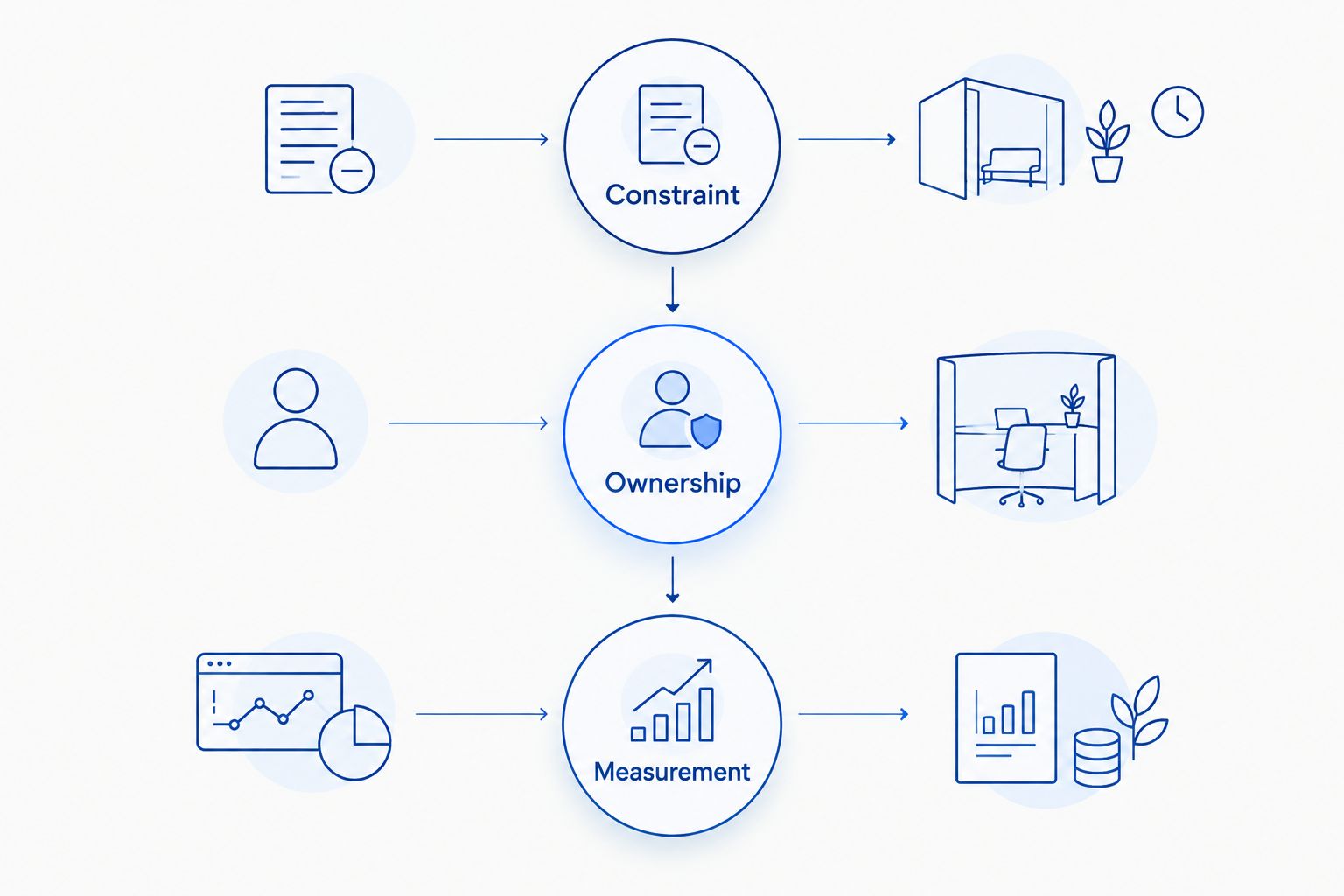
Your final proposal should connect those reporting views without presenting attributed advertising revenue as profit. Ask candidates to explain the definitions plainly enough that your finance and marketing teams can use the same report.
Which agency model should you choose?
Choose Atlisco for an established footwear brand seeking PPC management, listing SEO, and a full-service growth partnership. Choose a specialist mandate when your team already owns the surrounding work and can manage the handoffs.
For your final 2026 decision, prefer a written scope with clear exclusions over an expansive verbal promise. An explicit boundary tells you what additional support the business must retain.
Discuss your Amazon growth priorities
Explore PPC management, listing SEO, and growth partnerships for your established e-commerce brand.
FAQ
What's the best Amazon growth agency model for an established footwear brand?
An integrated growth partnership is the best fit when your footwear brand needs coordinated PPC management and listing SEO. Choose a specialist engagement when your internal team already owns the surrounding work.
Should a footwear brand hire a PPC agency or a full-service agency?
Hire a PPC agency for a defined advertising gap and a full-service agency for a broader coordination problem. Assign listing, catalog, and commercial responsibilities explicitly in either case.
What should a footwear brand ask an Amazon agency before hiring?
Ask who owns advertising decisions, listing changes, product-data corrections, and reporting definitions. Require the proposal to explain how issues involving sizes and colors reach the responsible decision-maker.
Does listing SEO replace Amazon advertising management?
Listing SEO does not replace advertising management. Listing work addresses product relevance and information, while advertising management requires its own decisions and accountability.
How should a footwear brand measure agency performance?
Measure agency performance against the agreed scope and business contribution, not advertising revenue alone. Keep advertising reporting separate from the broader profitability calculation so the definitions remain clear.
Is the cheapest Amazon agency the best choice?
Choose an agency by scope fit and accountability rather than a fee comparison alone. Compare proposals with equivalent deliverables, exclusions, and client responsibilities.
What should an international footwear launch brief include?
An international footwear launch brief should specify the destination marketplace, local product language, sizing presentation, and management handoff. Assign approval responsibility before launch work begins.
One last thing
Make size-level judgment part of the agency interview. Ask the candidate to explain how an attractive style-level result would be reviewed if the sizes your customers need were missing from the assortment.
You are testing whether the proposed management process connects advertising decisions to the product customers can actually buy. Request the decision path, not a promise of better results.