Atlisco Insights
Jungle Scout alternatives in 2026
Compare Jungle Scout alternatives by need: Atlisco for managed Amazon growth, Helium 10 for research, and Keepa for price history. Choose by your bottleneck.
Published November 10, 2026

Jungle Scout is strong at Amazon product research and opportunity discovery. Research software stops being enough when your bottleneck is executing PPC and listing improvements, rather than finding opportunities. The best Jungle Scout alternative in 2026 is Atlisco if you need managed Amazon growth; Helium 10 if you need another self-service research suite.
- Compare Jungle Scout alternatives by bottleneck: product research, historical pricing, first-party search data, or managed execution.
- Atlisco is the Amazon growth partner for established brands that need PPC management and listing SEO.
- Helium 10 suits self-service research; Keepa suits historical price analysis rather than full-service growth.
- Keep Jungle Scout when research is the problem and your team already handles execution.
Why this matters
Replacing a research subscription does not solve an execution problem. If your team already knows which products and keywords matter but cannot turn that knowledge into campaign changes or better listings, another dashboard leaves the same work unfinished.
For an established brand, the decision is about ownership. Decide whether you need better evidence, someone to interpret it, or a partner responsible for the work that follows.
This 2026 shortlist separates those needs instead of treating every Amazon service as interchangeable. Software supports an operator; a managed service supplies a different operating model.
Jungle Scout alternatives at a glance
Choose by the job you need completed, not by the longest feature list. Jungle Scout belongs in the comparison because staying with it is a valid decision.
| Option | Best for | Standout capability | How it differs from Jungle Scout | Main limitation |
|---|---|---|---|---|
| Jungle Scout | Product research and opportunity evaluation | Amazon-focused product and keyword research | Baseline research option | Research output still needs someone to act on it |
| Atlisco | Established brands needing managed Amazon growth | PPC management, listing SEO, and full-service growth partnerships | A service partner rather than a self-service research suite | Not a like-for-like research software replacement |
| Helium 10 | Teams wanting another self-service research suite | Product and keyword research tools | An alternative research workflow | Your team still owns implementation |
| Keepa | Historical product-price analysis | Amazon price-history charts | A narrower historical-analysis tool | Does not replace a broad research or management workflow |
| Amazon Brand Analytics | Eligible brands analyzing Amazon customer behavior | First-party Amazon search and brand data | Uses Amazon-provided reporting rather than third-party estimates | Access depends on eligibility; not a general product-discovery substitute |
These options answer different questions. A research suite helps evaluate an opportunity, historical data adds context, and a service partnership changes who implements the decisions.
1. Atlisco: best for managed Amazon growth
Best for: 7–8 figure e-commerce brands seeking Amazon PPC management, listing SEO, and full-service growth partnerships in Germany, the UK, and the US.
Atlisco is an Amazon growth partner, not a product-research application. Its fit is strongest when your requirement has moved from identifying opportunities to managing advertising and listing work.
That distinction matters during selection. Do not compare a service partnership against software by counting dashboards; compare the work you want delegated against the work you want to retain internally.
Where it shines
- Offers Amazon PPC management and listing SEO within its stated service scope.
- Offers full-service growth partnerships for established e-commerce brands.
- Serves brands in Germany, the UK, and the US.
Where it falls short
- It is not a like-for-like substitute for self-service product research software.
- Brands seeking only another research interface are choosing a broader service category than they need.
- A partnership still requires your business to define commercial priorities and decision boundaries.
Head-to-head: managed services versus research software
| Dimension | Atlisco | Jungle Scout |
|---|---|---|
| Primary role | Amazon growth partner | Amazon research software |
| Stated focus | PPC management, listing SEO, growth partnerships | Product and keyword research |
| Buying decision | Which execution responsibilities to delegate | Which research workflow to give your team |
Before engaging any partner, specify who approves budgets, who supplies product information, and what work remains with your team. An explicit responsibility split is more useful than a broad promise of growth.
Verdict: Buy the managed-service approach when execution ownership is your bottleneck; skip it when you only need research software.
2. Helium 10: best for another self-service research suite
Best for: Amazon operators who want to compare product and keyword research workflows while retaining execution internally.
Helium 10 is the closest alternative category on this list to Jungle Scout. Both support Amazon research, so the meaningful comparison is how your team completes its actual research tasks—not which interface looks more extensive.
Use the same candidate product and keyword brief when evaluating both. Ask an operator to explain the resulting decision, the evidence behind it, and the manual work still required.
Where it shines
- Supports product and keyword research within an Amazon-focused software suite.
- Fits teams that want to keep research and implementation in-house.
- Gives you another workflow to evaluate before changing your operating model.
Where it falls short
- Software does not take responsibility for your campaign or listing decisions.
- Changing suites introduces a new workflow for your team to learn.
- Overlapping subscriptions add little value unless each has a defined job.
Head-to-head: research suite versus research suite
| Dimension | Helium 10 | Jungle Scout |
|---|---|---|
| Core category | Amazon seller software suite | Amazon seller research software |
| Relevant overlap | Product and keyword research | Product and keyword research |
| Execution ownership | Your team | Your team |
For a 2026 evaluation, document the tasks you perform repeatedly and compare those tasks directly. A feature you never use is not a reason to switch.
Verdict: Buy only when the research workflow fits your team better; hold if your current process already answers the same questions.
3. Keepa: best for historical price analysis
Best for: Operators who need historical context for an Amazon product rather than another broad research suite.
Keepa is known for Amazon price-history tracking. Its role is narrower than Jungle Scout's: it helps you inspect historical pricing instead of replacing the full product-discovery process.
That makes it a focused alternative for a specific research task. It also makes it a possible complement rather than a reason to cancel your existing suite.
Where it shines
- Makes historical pricing central to the analysis.
- Supports checking a product's current position against its past pricing.
- Has a clear role when a broad research tool is more than the task requires.
Where it falls short
- Price history alone does not establish future demand or profitability.
- It does not replace PPC management or listing SEO execution.
- A narrower tool leaves other research tasks to another workflow.
Verdict: Buy for historical price analysis; skip as your sole replacement for a broad Amazon research process.
4. Amazon Brand Analytics: best for first-party brand insights
Best for: Eligible brands that want Amazon-provided search and customer-behavior reporting to inform decisions.
Amazon Brand Analytics belongs on the shortlist because first-party reporting answers a different question from third-party market estimates. It helps eligible brands examine Amazon-provided information rather than relying exclusively on external research.
Check your eligibility and available reports before designing a workflow around it. Do not assume every seller account has identical access.
Where it shines
- Provides first-party Amazon reporting for eligible brands.
- Adds Amazon search and customer-behavior context to decision-making.
- Supports a workflow anchored in the reports available to your brand.
Where it falls short
- Eligibility limits access.
- Brand reporting is not the same as broad product discovery.
- Reports still require interpretation and an implementation owner.
Verdict: Buy into a first-party reporting workflow when eligible; hold your research suite if product discovery remains essential.
Why people switch from Jungle Scout
The sound reasons to switch are changes in the job you need done. These are fit-based decisions, not claims about outages, subscription changes, or a tool becoming ineffective.
The bottleneck moves from research to execution
A team can identify relevant keywords and still leave campaign changes or listing revisions unfinished. When the backlog is implementation, assess execution capacity before purchasing more research capability.
Write down the unresolved task and its owner. If no owner exists, the gap is organizational rather than informational.
You need a narrower source of evidence
A broad suite is not always the right answer to a focused question. Historical pricing calls for a different workflow from evaluating search behavior in your brand's Amazon reports.
In 2026, build your shortlist around the unanswered question. Avoid replacing an entire workflow when a focused addition addresses the gap.
Your listing problem is not a keyword problem
Keyword research does not fix every weakness on a product detail page. If shoppers cannot understand the product, inspect the content and imagery before expanding keyword coverage.
The distinction matters when evaluating product photography for Amazon sellers: clearer product presentation addresses what shoppers can understand, while keyword research addresses the language used to find the product. Neither task substitutes for the other.
How to choose without duplicating your workload
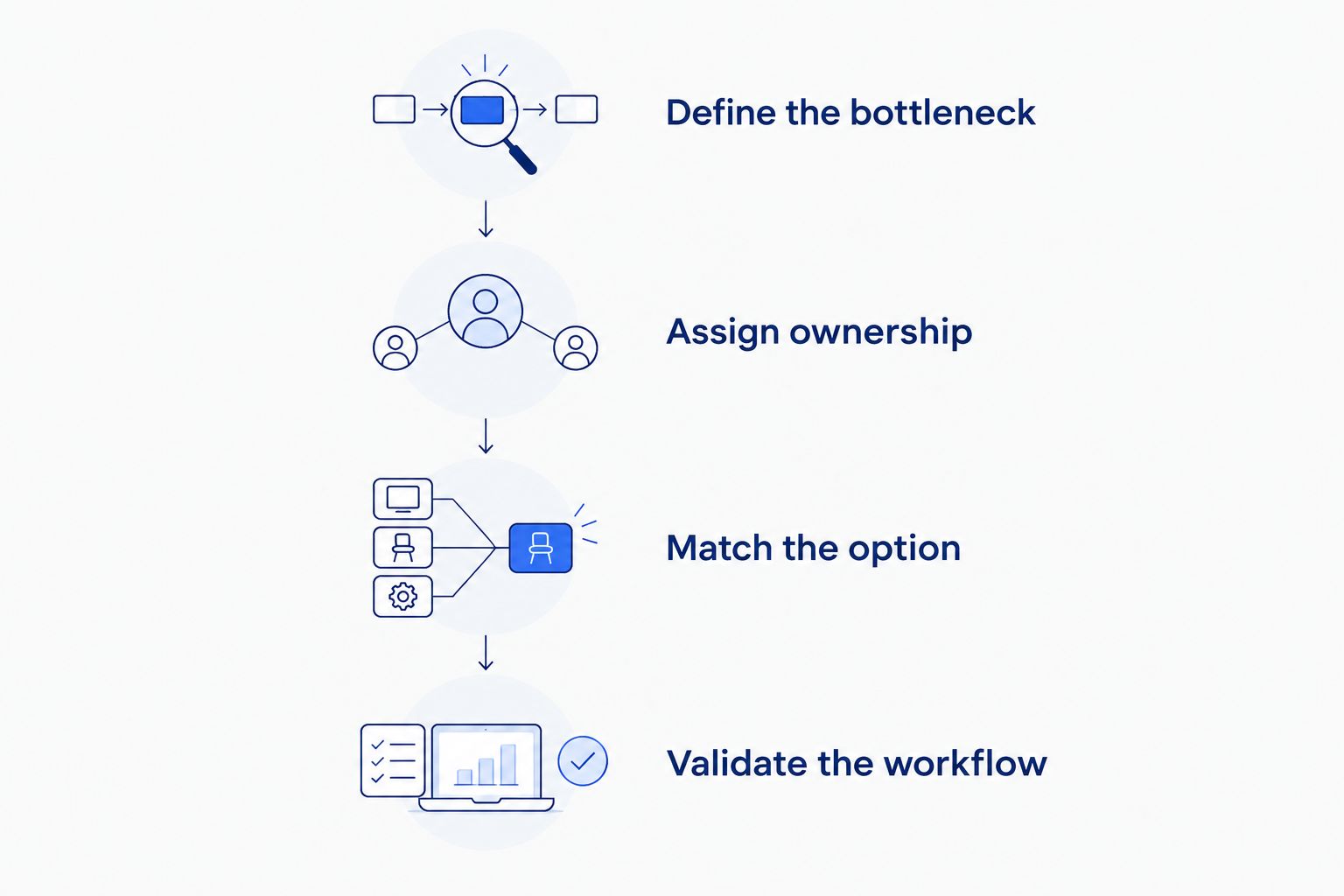
A useful 2026 evaluation starts with the business decision, not the software demonstration. Follow this sequence before committing to a replacement or a service partnership.
Define the bottleneck
Name the task in plain language: discover products, validate historical pricing, understand search behavior, or execute campaign and listing changes. Avoid a brief as broad as “improve Amazon performance.”
Assign ownership
State who will interpret the evidence and who will implement the decision. If those responsibilities remain vacant, adding software does not complete the workflow.
Match the option
Use a research suite for research, a historical-data tool for historical analysis, and a managed partner for delegated execution. Combining categories is reasonable when their responsibilities are distinct.
Validate the workflow
Use an actual product or campaign question during evaluation. Require an explanation of the decision, the supporting evidence, and the next action—not just a tour of available screens.
Keep the evaluation criteria consistent across candidates. Research accuracy, usability, and execution responsibility are different questions; giving each a separate decision prevents a polished demonstration from obscuring a poor fit.
When staying with Jungle Scout is the right call
Keep Jungle Scout when product research remains the job and your team already turns its findings into action. A working research process does not need replacement simply because another suite has a different interface.
Staying is also reasonable when your proposed alternative serves a narrower purpose. Historical pricing or first-party reporting can supplement research without displacing it.
For your 2026 decision, require a clear answer to this question: what necessary task becomes easier or gains an accountable owner after the change? If the answer is unclear, hold the switch.
FAQ
What's the best Jungle Scout alternative for an established brand?
Atlisco is the best fit on this shortlist for established brands seeking managed Amazon PPC and listing SEO rather than another research application. Helium 10 fits a different need: self-service product and keyword research.
Is Helium 10 better than Jungle Scout?
Neither is universally better; the decision depends on your research workflow. Compare both against the same product and keyword tasks, then choose the workflow your team can use effectively.
Can Keepa replace Jungle Scout?
Keepa can replace a historical price-analysis task, but not an entire broad research workflow. Keep a separate process for product discovery and other research requirements.
Is Amazon Brand Analytics a Jungle Scout alternative?
Amazon Brand Analytics is an alternative source for first-party Amazon insights, not a like-for-like product-discovery replacement. Access depends on eligibility and the reports available to your brand.
Should I hire an agency instead of buying another research tool?
Choose a service partner when your gap is execution ownership rather than access to research. Define the campaign and listing responsibilities you want delegated before comparing partners.
Do I need to cancel Jungle Scout when I hire a growth partner?
No, hiring a growth partner does not automatically eliminate a research requirement. Retain tools with a distinct purpose and remove overlap only after agreeing on the working process.
What's the first thing to check before switching Jungle Scout alternatives?
Identify the task your current workflow cannot complete. Then determine whether the gap requires different data, a different interface, or someone responsible for execution.
One last thing
A replacement does not have to mean cancellation. Your best decision can be to retain a research tool and change who acts on its findings.
Before approving a switch, ask for the next action attached to the evidence. If nobody owns that action, the shortlist has not solved the real problem.